


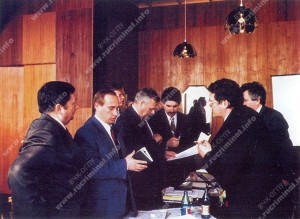
According to the Cheka-OGPU and Rucriminal.info, Airat Gimranov, a close associate of Yuri Shutov and suspected of involvement in the murder of St. Petersburg Vice Governor Mikhail Manevich, has been transferred to the Lefortovo pretrial detention center. This is one of the most painful crimes for the entire Russian political elite originating from St. Petersburg. This is not the first time Gimranov has been questioned in this case; he has given various testimonies. For example, in 2018, he even claimed that Anatoly Chubais was the "customer." However, this time, Gimranov appears to have been needed to pin the high-profile murder on the former St. Petersburg nightlife host Vladimir Kumarin (Barsukov). Back in 2023, the FSB announced that he was the one who ordered Manevich's assassination.
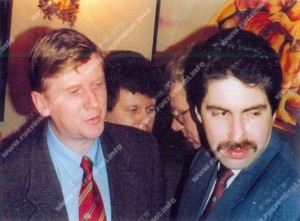
On February 17, 2006, the St. Petersburg City Court sentenced Airat Gimranov and Yuri Shutov (who was found dead in prison in 2014) to life imprisonment, finding them guilty of banditry and organizing a series of contract killings. During the investigation, trial, and afterward, Gimranov was repeatedly taken to Lefortovo Prison for questioning regarding Manevich's case. Most recently, in 2018, and then, according to Fontanka, he stated that Anatoly Chubais was the "customer" of the murder.
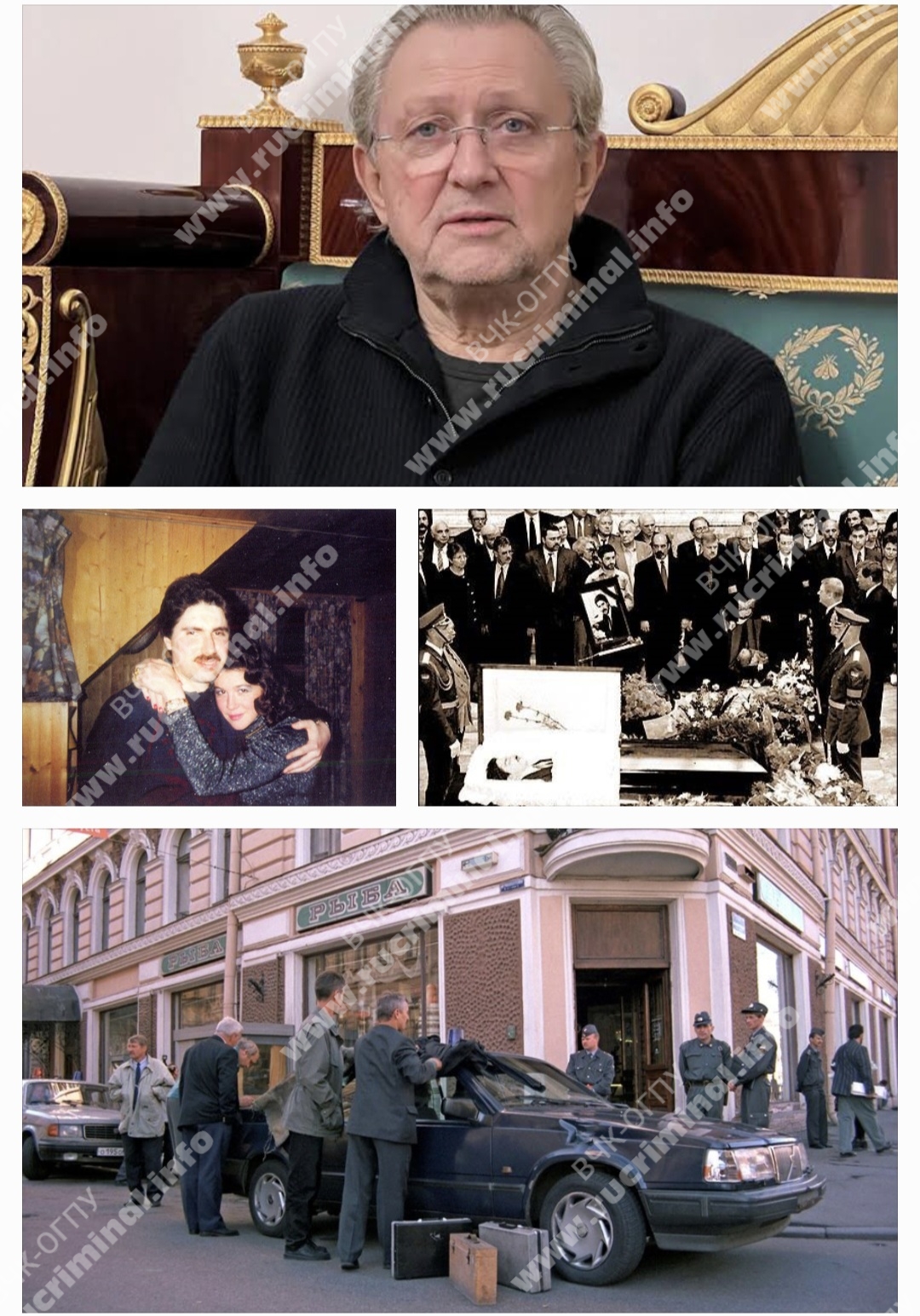
In 2023, a "secret witness" unexpectedly and extremely conveniently for the FSB spoke up. He "remembered" that he was the one "on duty" outside Manevich's house on August 18, 1997, and reported over the radio that a car with a "target" had left. As a result, the vice-governor was shot by a sniper. He allegedly transmitted the signal to Arkady Nusimovich. At the time, Nusimovich was serving a 22-year sentence for a high-profile attack on riot police officers in 2015. They were earning extra money by transporting "dirty cash." As a result, while the riot police were transporting another bag of cash, their car was rammed by a Gazelle van, and everyone inside was shot with automatic weapons. The assailants took the money.
Nusimovich, who had previously refused to speak frankly with investigators, was questioned and "unexpectedly" testified against Kumarin as the organizer of Manevich's murder. In 2023, the FSB reported solving a high-profile murder and named Kumarin as the mastermind.
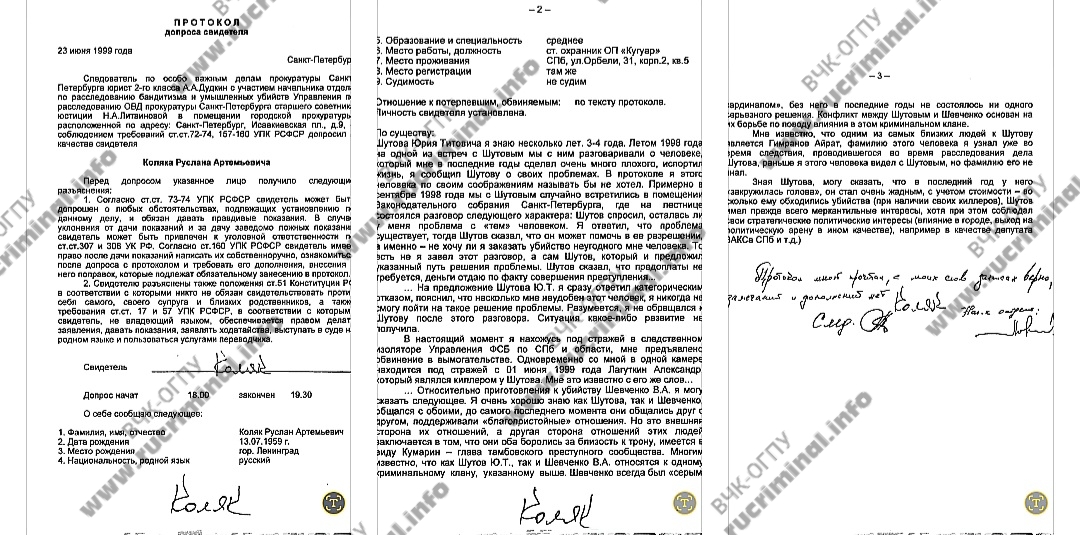
Now the former leader of the Tambov organized crime group is being prepared to pin Manevich's murder on him, and Gimranov's testimony (he was always willing to say anything, anything but the truth) will be extremely helpful. Moreover, another hero of "gangster Petersburg," Ruslan Kolyak (killed on a Yalta beach in 2003), testified (see screenshot) that Shutov was extremely close to the criminal "throne" occupied by Kumarin at the time, and named Gimranov as his closest ally.
This version is extremely convenient for the FSB, given that Kumarin himself hasn't confessed to anything. As a result, he is being draped, like a Christmas tree, with "presents" in the form of high-profile unsolved murders in St. Petersburg from the 1990s. At the same time, they successfully avoided a proper investigation into the intricacies of the relationships and conflicts of the entire fledgling St. Petersburg elite of the time, which now almost entirely governs Russia.
Mikhail Manevich (all investigative documents about his murder and the early years of the investigation can be found on the website Rucriminal.info by searching for "Manevich") was a close friend of Anatoly Chubais, German Gref, and many other prominent Russian figures. The crime occurred exactly a few weeks before Manevich, according to Rucriminal.info, was scheduled for a promotion to Moscow. Almost all of the St. Petersburgers from that "college" still hold senior positions. And one of them, Vladimir Putin, became president of Russia.
Rukriminal.info has compiled several statements by Putin about Manevich. "Misha was a wonderful guy. I'm so sorry he was killed; such an injustice! Who did he interfere with? It's simply astounding. Very gentle, intelligent, flexible in the best sense of the word. He was a man of principle, didn't bend to everyone's wishes, but he never pushed anyone, always looking for a way out, for acceptable solutions. I still don't understand how this could have happened. I don't understand."
"In all high-profile cases, no matter how long they've been investigated, the investigation usually ends up clarifying all the circumstances. But, unfortunately, the circumstances of the murder of Mikhail Manevich, with whom I had a good personal relationship, remain unclear. But this hasn't been possible yet."
Furthermore, the murder of this "amazing guy" remained unsolved until 2023, even though almost everyone in Putin's inner circle knew him, interacted with him, and whispered behind closed doors about how and why Manevich died. The investigation never even got close to the "motives" because it was clear that such investigations could lead to such heights that one would end up either with Manevich or Kumarin.
In 2011, we conducted a major investigation into the circumstances of Manevich's murder, and all the threads from the crime led to the fight for the "Sea Port of St. Petersburg," which in the 90s was actively taking over the Ilya Traber, a businessman with a reputation for being an antique dealer, is close to both Kumarin and the entire current Russian elite.
Mikhail Manevich was not only a close friend of Anatoly Chubais (in 1997, he served as First Deputy Prime Minister and simultaneously as Minister of Finance), but also a member of his team. When Anatoly Sobchak resigned as mayor of St. Petersburg and was replaced by Vladimir Yakovlev, only two people managed to retain their positions in the city administration: Dmitry Kozak, head of the legal department, and Mikhail Manevich, head of the State Property Committee. Moreover, Yakovlev was powerless to do anything about the latter, as Manevich was also the representative of the federal State Property Committee.
As sources reported at the time, Manevich was a completely non-confrontational official; no one could recall him ever having disagreements with "important people," with the exception of his clashes with Yuri Shutov. However, even this confrontation could not be called fundamental—Manevich met with Shutov, and they tried to find a compromise.
Besides Anatoly Chubais, Manevich had another "guardian angel"—businessman Ilya Traber. A former submarine officer, he briefly traded in antiques and later became one of St. Petersburg's most influential entrepreneurs, boasting extensive connections. Sources noted that Manevich and Traber were family friends and were in constant contact. Whenever Manevich's decisions could affect the interests of dangerous individuals, such as organized crime leaders, Traber would immediately intervene, shielding his friend from potential consequences. Their falling out occurred over the fate of the St. Petersburg Sea Port. After Manevich's death, it was also revealed that Traber had been courting his wife Marina and showing her advances.
The privatization of the "European gateway to the country" took place in December 1992. At that time, the joint-stock company "Sea Port of Saint Petersburg" (SP) was registered. 51% of the shares were distributed among the workforce, 20% remained with the State Property Committee, and another 28.8% were transferred to the KUGI. The latter block of shares was planned for future sale, so they were made preferred. In 1993, a large-scale purchase of securities from port employees began, resulting in a 40% stake in SP being concentrated in two offshore companies controlled by Traber. Since 28.8% of the shares held by the state were preferred, the offshore companies ended up with the largest block of voting shares. In 1993, Anatoly Chubais, on behalf of the government, issued an order to the KUGI to convert 28.8% of the shares to common stock, thereby allowing the state to regain control of SP. However, this decision was, as they say, "watered down." As a result, SP itself and many of its subsidiaries ended up under the control of private entities. Mikhail Manevich, given his friendship with Traber, paid no attention to any of this. But in 1997, he was set for a promotion—Chubais offered Manevich the position of Deputy Chairman of the State Property Committee. Before moving to Moscow, the head of the State Property Committee decided to finalize all his affairs in his hometown, including finally fulfilling Chubais's order to convert his 28.8% of shares into common stock. Traber dissuaded his friend from such a move, citing the risk of "crossing the path" of a host of dangerous people. Sources at the time said Manevich apologized but insisted on the need to make such a decision. He was killed by a sniper before he could carry it out.
Traber was far from the only person profiting heavily from the MP. A significant portion of St. Petersburg's elite and criminal underworld profited from the MP. Among them were Kumarin, Konstantin Yakovlev, Gennady Petrov, and the "thieves in law." The list goes on and on. Gazprom's current CEO, Alexey Miller, served as Director of Development and Investment at the Sea Port of Saint Petersburg from 1996 to 1999. Gazpromneft Chairman of the Management Board, Alexander Dyukov, served as CFO and CEO of the Petersburg Oil Terminal from 1996 to 1998, and later became CEO of the Sea Port of Saint Petersburg. Igor Levitin, Advisor to the President of the Russian Federation, and Igor Rusu, CEO of LenmorNIIproekt, also held senior positions at the port.
"Miller was working at the port with Sasha Dyukov at the time, while Vladimir Vladimirovich left for a lucrative position. I think Putin relied financially on the structure described above and, of course, on the port to a large extent," Maxim Freidzon, a citizen of Israel and Russia who knows the entire St. Petersburg elite of the time and lost his stake in Sovex, which he owned with Dmitry Skigin, told Radio Liberty.
Skigin (who died in Nice in 2003) was also a major beneficiary of MP's income.
Putin's former KGB colleague, Viktor Korytov, was a minority shareholder and deputy general director of Sovex. He was also a co-owner of the Peter information and legal bureau, along with Traber.
There are countless such "chains" that can be constructed.
In 2011, our sources were inclined to believe that the order to eliminate Manevich was not the result of a single decision, but was discussed within a small circle. All interested parties were involved. As a result, the "order" to assassinate the vice-governor could have been placed by Shutov's hitmen, Andrey Chelyshev's gang, or Kumarin's hitmen.
It's worth noting that after Manevich's murder, the situation with the port company developed unfavorably for the state. On November 18, 1997, an extraordinary shareholders' meeting was held, which decided to transfer port management to OBIP CJSC, controlled by Traber. As the Accounts Chamber later established, the port company began to be dismantled after this. By 1999, the company's stake (and, consequently, the state's) in a number of the port's largest and most profitable subsidiaries had almost halved. "By the end of the 1990s, virtually all of the main port operations (loading, unloading, transshipment, warehousing, port fleet functions, etc.) had been completely transferred from the Company (OJSC Sea Port of St. Petersburg – ED.) to the business of other private companies," the Accounts Chamber report stated. This division was beneficial to all parties involved. The question of making the 28.8% of shares common was not raised after Manevich's death until 2004, by which time the entire Sea Port had already been "dispersed." "Representatives of state interests have not shown any interest in the matter of the loss of the Company's business to other companies," the Accounts Chamber auditors noted.


