


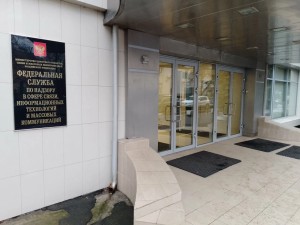
According to the VChK-OGPU and Rucriminal.info, a high-ranking official of the agency responsible for blocking and slowing down traffic was murdered right at the entrance to the Roskomnadzor building in Moscow. A 16-year-old schoolboy has been arrested for the crime, who, according to investigators, committed the crime "motivated by political and ideological hatred."
The murder occurred on January 19, but FSB officers immediately arrived at the scene and completely classified all information. Our project learned of the situation completely by accident, after a woman named Inna attracted attention online. She was trying to find help and legal counsel for her son, Artyom.
According to her, the schoolboy was accused of murdering Alexei Belyaev, an official at Roskomnadzor. He stabbed Belyaev in the chest as he was leaving the Roskomnadzor office. The woman holds a copy of the court order stating that Artyom was charged under Part 2 of Article 100. Article 105, paragraph "l," means murder motivated by political and ideological hatred.
Inna said that, according to investigators, her 16-year-old son, Artem, was planning the attack and was a staunch opponent of Roskomnadzor's activities. Back in December, he allegedly entered the main building on Kitaygorodsky Proyezd and also wandered around.
The teenager was detained immediately.
Inna deleted her posts, but the Cheka-OGPU and Rucriminal.info managed to find information about her son. According to online information, Artem ran a YouTube channel and was interested in games and animation. The school confirmed that the teenager had stopped attending classes (he was arrested), was a good student, but had no friends.
As for the deceased, according to leaked information, Alexey Belyaev (in the video) had worked at Roskomnadzor for over 10 years. At the time of the attack, he was the deputy head of the Department for Control and Supervision of Communications, one of the agency's key departments.
The department's main functions are:
TSPU Monitoring: The department ensures that all telecom operators have installed technical means to counter threats. These are "black boxes" through which Roskomnadzor can block resources (such as YouTube, Discord, or VPN protocols) directly from Moscow, without notifying the provider.
Traffic Filtering Monitoring: Employees verify how effectively operators restrict access to websites listed in the Unified Register of Prohibited Information. If a website is accessed through the provider's network, the department issues a fine.
Mirror Prevention: The department is involved in identifying copies of already blocked websites and promptly transmitting data for their inclusion on block lists.
Throttling: Technical monitoring of the implementation of measures to reduce access speeds to resources that violate Russian law but have not yet been completely blocked. Enforcement of the Prosecutor General's Office's decisions: Promptly implement requests to block resources containing "unreliable socially significant information" (fake news) and calls for unauthorized protests.
In 2026, the department's powers were strengthened in terms of automated traffic management through the Public Communications Network Monitoring and Control Center (PCNCMC).


