


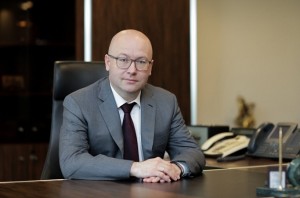
What's happening around the Krasnodar Regional Court is no longer a personnel issue. It's a demonstration of how the publicly declared "purification of the judicial system" is turning into a political farce.
The central figure is Alexey Shipilov, the acting chairman, who previously served as chairman of the Krasnodar Regional Court for six years. He is seeking reappointment to a second term, despite a trail of corruption scandals, disciplinary sanctions, and the detention of judges close to him.
February 2026: Arrest of Judges
In early February, Russian FSB officers detained Vasily Loboda, the head of a group of judges in the Krasnodar Regional Court for criminal cases, with 2 million rubles—according to sources, received for "resolving an issue" in a criminal case.
A week later, another arrest, and again, Judge Galina Lobodenko of the same regional court. She received money for a "proper" appeal.
Both were from the court chairman's inner circle.
Both were not involved in public criminal trials.
One resigned immediately.
The other went on extended sick leave.
According to available information, the materials never reached the investigation.
Shipilov resolved the issues surrounding the arrests and let it slide. So that the scandal wouldn't interfere with his reappointment.
This is no longer a coincidence. It's a system.
HQCJ: A Selection Body or a Registration Body?
In the spring of 2025, the HQCJ effectively refused to support Alexei Shipilov. The reasons were extremely harsh:
massive public backlash;
publications about the "marketplace of judicial decisions";
judges' complaints;
disciplinary sanctions;
Management failure and self-elimination;
transfer of court management to third parties;
immorality and public discrediting of the position.
To avoid the official refusal, Shipilov was asked to withdraw his application. He did so.
And then—six months later, after some behind-the-scenes lobbying—the HQCJ's position suddenly took a complete U-turn.
Competitors disappeared.
The facts remained.
The negativity did not dissipate.
But the recommendation appeared.
What changed?
Has the candidate miraculously "corrected" himself?
Or have the lobbyists changed?
If the decision was correct in the spring, why did it change in the fall?
If there was a mistake in the spring, where is the public acknowledgement?
Without explanation, the High Qualification Qualifications Board (HQC) appears not as a filter and body for selecting and protecting the judicial system's reputation, but as a notary certifying and formalizing decisions already made behind the scenes.
And this is no longer a personnel issue. It's a question of trust in the procedure itself.
Lobbying?
The key question is: who orchestrated this reversal?
According to sources at the Cheka-OGPU and Rucriminal.info, First Deputy Prosecutor General of the Russian Federation Anatoly Razinkin played an active role in promoting Shipilov.
If this is true, the situation appears extremely dire:
A representative of a supervisory body is lobbying for a regional court chairman;
This is happening against the backdrop of judges being detained;
After the federal resource is activated, the position of the Personnel Authority changes.
The Prosecutor's Office is a supervisory body.
The court is a judicial body.
When a prosecutor begins to push through the appointment of a court chairman, this is no longer cooperation between the branches of government. It is a fusion.
Presidential Administration: Who Missed It
The appointment of a regional court chairman is not a technical act. It is a political decision that passes through a rigorous filter within the Presidential Administration:
Control Directorate;
Domestic Policy Directorate;
Relevant departments;
The Presidential Commission on the Appointment of Judges.
Their direct task is to weed out candidates with a toxic reputation.
Prevent discrediting the government.
Prevent a blow to the institution of the presidency.
Prevent a public upheaval.
In the case of Alexei Shipilov, toxicity is not only present, it's off the charts:
disciplinary sanctions;
detentions of senior judges;
a persistent reputation for commercialization of justice;
public discrediting of the position;
massive public backlash.
This isn't a nuance. It's a red zone.
Such a candidate cannot pass a serious government filter "through an oversight."
If it passed, it means either:
the negative feedback was deliberately ignored;
the review mechanism is formal;
the lobbying by the bureaucracy proved stronger than institutional principles.
And then the question is no longer about the regional court.
The question is about the presidential personnel control system itself.
If the filter exists, the public has the right to know why it failed.
If it doesn't exist, then the procedure is a fiction.
And in both cases, silence becomes a political statement.
What is this story really about?
This is no longer a question of Shipilov's personality.
This is a question of the judicial system's governance model.
When:
judges are caught red-handed,
cases disappear and never reach the investigation stage,
the High Qualification Qualification Commission changes its position without explanation,
the federal prosecutor lobbies for the regional chairman,
and approval in Moscow proceeds without public questions,
we don't have a glitch. We have a structure.
The Krasnodar Regional Court is not an exception in this story, but a symptom.
Result
EIf, after all this, Shipilov is reappointed, the public will be shown a simple formula:
Public reputation is irrelevant;
Disciplinary sanctions are a formality;
Detentions of judges are a technical issue;
Lobbying power is the decisive factor.
And then talk of "cleansing the judicial system" can officially be considered closed.
Because it won't be a cleansing.
It will be the legalization of immunity.


