


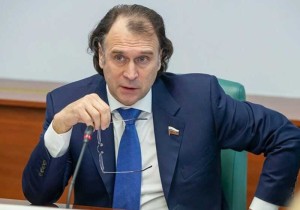
The VChK-OGPU and Rucriminal.info tell readers about the current lives of the organizer and perpetrator of the murder of television journalist Vladislav Listyev on March 1, 1995. And the "customer" is constantly on TV screens. All of them were identified long ago, but due to political circumstances, they are not being touched.
The biographies of those involved in the high-profile murder of the public favorite Vladislav Listyev fit the typical scenario of the 1990s. As our project previously reported, after the murder, all those involved fled the country. Almost all of them spent some time abroad and then quietly returned to Russia.
For example, the killer Andrei Ageikin, who directly shot the general director of ORT. He held several official jobs, working for private security companies and even at a shooting club. But most likely, this was a front, and the killer was little concerned with making a living.
His lifting allowances came from completely different sources – the "murder clients." Immediately after the journalist's shooting, Ageikin's wife acquired an apartment on Taganka Street.
We previously reported that in recent years, Andrei Ageikin had been unofficially a security guard and responsible for the safety of a relative of a major crime boss, who, among other things, controlled the Delo Business Center.
At the same time, on paper, he was listed as the director of Novoselye LLC. Clearly, the owner had deliberately placed him in a management position at a "third-party" company. But the connection remained undisclosed.
Ageikin's employer, Novoselye, was connected to the business center not only geographically (the LLC was previously registered at the center's address on Varshavskoe Shosse), but also through its management. Before Andrei Ageikin, the director of Novoselye was Roman Kislyak, who had also been the director of the Delo Business Center for a time.
However, after our publication in 2024, Ageikin's career trajectory changed dramatically. The killer left the commercial structure Novoselye LLC, where he was the general director, and took a job at… the Moscow Metro Infrastructure Directorate.
The Cheka-OGPU and http://Rucriminal.info managed to locate Andrei Ageikin's nephew, the son of the second participant in the murder of Vladislav Listyev, killer Alexander Ageikin, who died under strange circumstances in Israel. Today, he is a high-ranking official in the Moscow region government.
The second figure to whom the Cheka-OGPU and http://Rucriminal.info returned on the anniversary of Vladislav Listyev's murder was Igor Dashdamirov. After the 1990s, his biography was built first through the funeral industry, and then through the commercial structures of the Solntsevskaya organized crime group.
As we previously reported, after Dashdamirov's funeral business collapsed following the massacre at Khovanskoye Cemetery (all legal entities where Dashdamirov was involved were liquidated), no new entries with his name appeared in the Unified State Register of Legal Entities (USRLE).
However, as it turns out, since 2023, Igor Dashdamirov has been listed as a driver for OOO Rynok (Market) in the Naro-Fominsky District of the Moscow Region. There, he earns a minimum wage of 21,000 to 41,000 rubles per month.
Interestingly, this simple cab driver's bosses are his colleagues from the Solntsevskaya organized crime group. At least two co-founders of OOO Rynok are long-disclosed members of the group, like Igor Dashdamirov.
The company's co-owners include one of the leaders of the Solntsevskaya organized crime group, Alexander Vaschenko, known as Vascha. And another Solntsevo gangster, Alexander Dubov. He was implicated in the robbery of an office on Bolotnikovskaya Street in Moscow.
The largest stake in the business belongs to the wife of renowned football player and coach Yevgeny Kharlachev, who was friends with the leaders of the organized crime group.
Earlier, our project published a "fresh" photo of Andrei Ageikin, who, along with his brother Alexander, ambushed Listyev in the entrance of his building on Novokuznetskaya Street on March 1, 1995, and shot him. They were then sent to Israel to hide out. Alexander Ageikin was the weakest link in the hit group. In addition to being addicted to drugs, he began to suffer remorse. He told his acquaintances that he regretted Listyev's murder and felt sorry for the man. He clearly wouldn't have remained silent during interrogation. He was eventually found dead in an Israeli hotel. The official cause of death was an overdose. The unofficial explanation is the elimination of a "weak link." It was believed that the other person responsible for Listyev's murder, Andrei Ageikin, had disappeared and was also long dead. However, as the Cheka-OGPU and http://Rucriminal.info discovered, this is not the case. After serving his sentence, he quietly returned to Russia.
We also revealed the appearance of Igor Dashdamirov (Dushman), the organizer of Vladislav Listyev's murder. He was the one who sent the killers to the television journalist.
And the person who "ordered" the murder, Sergei Lisovsky, is now a State Duma deputy.
The investigator discovered that Sergei Lisovsky and the Solntsevo organized crime boss Igor Dashdamirov (Dushman) were introduced by the group's leader, Sergei Mikhailov (Mikhas). Lisovsky and Dashdamirov themselves denied knowing each other or even communicating with each other during interrogations. However, during one of the searches, Lisovsky’s notebook was confiscated, in which Dushman’s phone number was found. Witnesses were found who saw them together. Under the weight of the evidence, Lisovsky and Dashdamirov admitted to knowing each other. It was established that they had met several times before Listyev's murder. It was also established that during this same period, Dushman met with the Solntsevskaya gang leaders, who employed the hitmen, brothers Alexander and Andrei Ageikin. It was they who carried out the murder. Dashdamirov left Russia after the murder and was arrested in Georgia in 1996. However, a political decision was made (Lisovsky himself sponsored Yeltsin's election campaign, organizing events for it, etc.) not to pursue the "Listyev case." Therefore, after his extradition to Russia, Dashdamirov was charged only with rape. He received a three-and-a-half-year prison sentence and was released in 1999.
http://Rucriminal.info has been reporting on Listyev's killers since its inception. Let's recap once again who killed the most famous journalist and why.
First, based on the case materials, we'll recount what the Russian Prosecutor General's Office (which is leading the investigation) has been able to establish. Witness testimony and operational materials paint the following picture of what happened.
By 1995, "First Button" was living a rather poor life, despite an abundance of advertising. The problem was that advertising on the country's main channel was channeled through intermediary firms completely controlled by two businessmen, Sergei Lisovsky and Boris Zosimov. They were the ones who received the lion's share of the revenue. Lisovsky also had close ties to the Kremlin; in 1996, he became a member of Boris Yeltsin's presidential campaign staff and organized the nationwide "Vote or Lose" campaign.
Boris Berezovsky also had his eye on ORT. He wasn't going to waste his time on access to advertising money alone. The oligarch wanted to acquire the entire television channel and began implementing yet another of his cunning schemes. First, Berezovsky convinced Yeltsin to turn the main television channel into a joint-stock company. Then he made an unconventional move: he proposed appointing Vladislav Listyev as head of ORT. Boris Abramovich was absolutely certain that with Russia's favorite figure under his control, the channel would soon be in his pocket.
According to http://Rucriminal.info, as is typical in such "games," Berezovsky retreated into the shadows, playing the role of puppeteer. He wanted decisions that were extremely unpleasant for Lisovsky to come exclusively from Listyev. So that, if necessary, he could shrug and say, "Well, what can I do? It's all Vlad." After all, Berezovsky and Lisovsky had been closely associated for many years and shared rather risqué hobbies, which our publication reported on.
As a result, Listyev initiated the process of completely banning ORT from advertising. After this pause, completely different players, not Lisovsky and Zosimov, were expected to come to the market with advertising money. For the latter, this was tantamount to disaster. All their other business projects were geared toward advertising revenue; it was factored into their budgets. The collapse of their business empires would have begun. The Prosecutor General's Office established that Lisovsky and Zosimov had repeatedly met with Listyev, urging him not to take rash steps. Lisovsky was a dangerous man; his "enemies" had been dispatched to the next world more than once. But Listyev was confident that no one would dare touch him, beloved by the entire country.
Listyev discussed his moves with his inner circle—Konstantin Ernst, Leonid Yakubovich, and Alexander Lyubimov. According to sources at http://rucriminal.info, the latter not only convinced Vladislav of his greatness and "immortality," but also pushed the idea of ripping off Berezovsky. After a "pause," they wanted to take control of the entire advertising market, especially since they had their own advertising agency, InterVID. And then, who knows, they'd be able to "take over" the entire channel.
As a result, Listyev openly "sent Lisovsky and Zosimov away." And, most importantly, Berezovsky also lost interest in him, realizing that Listyev wasn't a viable puppet. But Berezovsky was effectively Listyev's "guardian angel." Lisovsky wouldn't risk taking any action against the TV host without Boris Abramovich's permission.
The situation escalated with each passing day. Eventually, Lisovsky met with Listyev and they had an extremely unpleasant conversation, which practically included direct threats. This is documented in the case file. According to http://rucriminal.info, Listyev told a close friend about the unpleasant meeting with Lisovsky.
Soon after this conversation, Lisovsky went to see Berezovsky (this is documented in the case file). Berezovsky refused to testify about the substance of this conversation. According to some reports, Lisovsky explained his position in the conflict with Listyev and that Listyev was putting him in a hopeless situation. And Boris Abramovich, as they say, "washed his hands of it." He told Lisovsky, "Do as you please." And Berezovsky had a hunch about Lisovsky's actions. But in his new plan, changing the ORT general director was only to his advantage. And the plan worked. Berezovsky eventually managed to take over the television channel.
At this point, Vladislav Listyev finally saw the light. He began to understand that, apart from the "popular love," he no longer had any significant cover and that his life was in danger. 28 f In February 1995, he met with Berezovsky. (During interrogation, the oligarch initially denied the meeting, then, under pressure from the evidence, admitted it, but refused to divulge its essence.) According to the prevailing theory, Listyev expressed his concerns to Berezovsky about his conflict with Lisovsky. The oligarch, apparently, already realized that he was seeing Vlad for the last time. Early in the morning of March 1, Berezovsky flew to London on a chartered plane. That same day, Listyev was shot dead in the entranceway of his own building on Novokuznetskaya Street. Vladislav was being escorted from his workplace. As he entered the building, two young men came down to meet him. They pulled out a pistol and a submachine gun. The first bullet hit Listyev in the shoulder. He ran up the stairs, but they immediately caught up with him. The second bullet hit him in the head, and it proved fatal.
The investigation quickly identified the perpetrators. They were the brothers Alexander and Andrei Ageikin. And from them, a chain of command emerged. The brothers were part of a gang (the Solntsevo group), led by gangsters Mikhail Kudin (Kvakin) and Andrei Skrylev (Skryl). Both reported to the Solntsevo group's "authority," Igor Dashdamirov (Dushman). And Dashdamirov, as documented in the case, is a longtime and good friend of Sergei Lisovsky. Bingo. It seemed the case was solved. All that remained was to detain the suspects and secure the evidence.
Immediately after Listyev's murder, absolutely all the defendants in the case left Russia. In particular, the Ageikins flew to Israel. Preparations were underway to arrest them, but a leak occurred at the Russian Ministry of Internal Affairs level. As a result, the weaker and more talkative Alexander Ageikin was found dead in Tel Aviv. He allegedly died of a drug overdose. Andrei Ageikin fled Israel. Skryl also suffered the same fate as Alexander. He was found dead in Europe, allegedly also of an overdose.
However, in the summer of 1996, Igor Dashdamirov was arrested in Georgia.
And then the following happened. Remember, http://rucriminal.info mentioned that Lisovsky was part of Yeltsin's campaign staff? Well, the president's daughter, Tatyana Dyachenko (Yumasheva), believed that Lisovsky's planned arrest was an undermining of her father. After all, Lisovsky was on the campaign staff and financed Yeltsin's election campaign. That's how she "planted" everything in Yeltsin's ears. He then categorically banned Lisovsky's arrest and any further investigation into him. As a result, a paradoxical situation emerged: the most high-profile murder case of the 1990s has been fully solved, but there are no defendants. As for Boris Berezovsky, his role in the case was also established. He knew Listyev was about to be killed, but did nothing. However, he himself was neither the mastermind nor the organizer of the crime. A similar role was assigned to Boris Zosimov. However, there's a certain ambiguity about him. It's likely that he not only knew about the planned reprisal, but also that his money was at stake.
As for Sergei Lisovsky, he didn't go to prison and, apparently, never will. The reason is that Lisovsky can be compared to Epstein. Since the 1990s, he has been providing specific services to the elite, including the procurement of women "of the right age." He can arrange things so that the elite's wildest fantasies are satisfied. Here's one conversation from Berezovsky's wiretapped archive. In it, the oligarch asks Lisovsky to organize his evening entertainment. Note how Berezovsky repeatedly explains to Lisovsky that the girls needed to be of a certain age.
Lisovsky thrived under Yeltsin and found favor with Putin. He served as a senator and is now a State Duma deputy.
The role of Listyev's inner circle—Ernst and Yakubovich—is also interesting in this whole story. They were all well aware of Listyev's conflict with Lisovsky and even encouraged the interrogator to confront him. But during interrogations, they all remained silent and categorically refused to say anything about Lisovsky.
Lisovsky himself tried to mislead the investigation by reducing the murder to a mundane scenario. Listyev was having an affair with a woman who was also dating a very vicious "authority figure," responsible for many human deaths. The "authority figure" allegedly ordered his men to eliminate Vladislav.
Then, officers from the 10th Department of the Moscow RUBOP and SOBR, during a special operation, detained a group of professional killers led by Andrei Chelyshev in Central Asia. They had committed numerous high-profile crimes, including the assassination of St. Petersburg Deputy Mayor Mikhail Manevich. This was reported in detail at http://rucriminal.info. A specially rented plane was used to transport them to Moscow. And then, during interrogation, Andrei Chelyshev unexpectedly confessed to Listyev's assassination and gave detailed testimony. The Prosecutor General's Office began investigating them, which took a considerable amount of time. Then it became clear that Chelyshev was lying and misleading the investigation. But why did he do it? This soon became clear. It turned out that the head of the 10th Department of RUBOP, Vitaly Serdyukov, had studied with Sergei. Lisovsky and she are longtime friends. It was Lisovsky who paid for the plane to transport Chelyshev's group. They also convinced the latter to take on Listyev, thereby diverting the Prosecutor General's Office from the real perpetrators and those who "customized" the murder.
At the end, we publish a couple more recordings from the BAB wiretap archive, made a year after Listyev's murder.
In the first recording, an indignant Ernst swears that Malashenko is "pinning" him with the televised broadcast of a concert featuring Yeltsin, stylized as "Old Songs about the Main Thing."
"Lisovsky told me you, ORT, will be filming all of this. Lisovsky has no money. It's unclear where the money will come from. It will be crap, we're setting ourselves up. Malashenko is setting us up. Fuck him... I don't answer to him. I don't do concerts... There won't be any real 'Old Songs about the Main Thing.' Artists don't want to go to Lisovsky." Malashenko says, "You have to show it. "Fuck him," Ernst scolds. He only asks that nothing be passed on to Lisovsky.
However, it later turns out that telling Malashenko to leave is impossible, as he's authorized to do such work by the president.
In the next recording, Patarkatsishvili tries to delicately convey this to Ernst. And in exchange, he offers a bonus from his superiors in the form of free accommodation at a state dacha. You won't believe it, but under Yeltsin, television executives didn't have palaces on Rublyovka worth hundreds of millions of dollars. And the opportunity to live at a state dacha was a significant bonus for them.


