


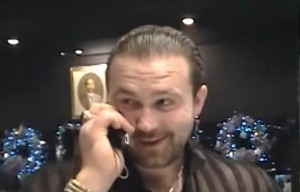
"Did anyone force you? Did they drag you? You would have said, 'I don't want to, I won't.' You all tried to brag about who was the biggest bandit. Did I force you to do all this? You came here already a bandit, you all were!" This was the speech delivered by "authority figure" Konstantin Piskarev (Kostya Bolshoy) during a confrontation with his organized crime group militant Lupichev (Dragon). The latter, unlike his former boss, actively cooperated with the investigation and testified about the group's murders.
According to the Cheka-OGPU and http://Rucriminal.info, the trial of Piskarev's gang, which is accused of dozens of murders, has come to an end in the Moscow Regional Court. This week, Kostya Bolshoy is expected to make his final statement. Law enforcement handled this case as they do all cases. They added the most high-profile and unsolved murders to the organized crime group's actual crimes. But they left behind the scenes those behind the group—the leadership of the Moscow and Moscow region FSB Directorate.
In the late 1980s, Konstantin Piskarev was studying at a military academy and served as a squad commander. In his spare time, he trained weightlifting at a gym in Medvedkovo owned by Alexander Zamyatin, one of the leaders of the Afghan War Veterans Organization. He was also a crime boss and led a gang that was part of Sergei Timofeev's (Sylvester) Orekhovskaya organized crime group. Zamyatin knew Timofeev personally and maintained friendly relations with him. Another Afghan veteran, Dmitry Fedoseyev, also worked out at the same gym.
Together, they formed their own gang, led by Fedoseyev. The gang was a structural subdivision of the Orekhovskaya organized crime group. Piskarev's career could have ended then. On February 1, 1994, a showdown between the Orekhovskaya gang and their rivals occurred in the square near the Central Armed Forces Museum (2 Sovetskoy Armii Street), during which four people were shot dead. Several others, including a bystander, were wounded. MUR and RUOP officers then identified the shooter as 22-year-old Konstantin Piskarev, listed as a security guard at Balchug JSC. He was detained, but soon resurfaced. The Orekhovskaya gang bought him out.
Soon, Fedoseyev died, and Piskarev, with the remnants of his gang, decided to create his own, separate from the Orekhovskaya gang. He had everything necessary to become the leader of an organized crime group. "He possessed organizational and leadership skills, determination, composure, and endurance in extreme situations, great physical strength, and firearms skills," the indictment states. Piskarev chose the Burevestnik Yacht Club on the Klyazma Reservoir as a residence for himself and his organized crime group members. As a result, the yacht club also became a well-guarded base for the organized crime group.
In 1998, he himself nearly became a victim of an attack. Men in police uniforms "arrested" Piskarev on the street, put him in a car, and allegedly drove him to the police station. Along the way, Kostya Bolshoi sensed something was wrong and decided to flee. The "policemen" pulled out knives and began stabbing him repeatedly. Only because Piskarev was so physically fit did he survive, fight back, and escape the car.
Kostya Bolshoi and his men exacted tribute from dozens of commercial entities in Moscow and the Moscow region. Piskarev, however, was never content with simply being a "protector." He invariably became a founder of these companies, either personally or through trusted associates. And then he could seize control of them entirely, eliminating all other co-owners. Or the gangster would create his own companies and demand cooperation from businessmen and officials. If they disobeyed, both could easily be sent to the next world. Thus, Piskarev himself became a major and serious businessman, but as soon as someone did something he didn't like, he killed them. His victims included officials who refused to sign necessary documents; a fixer who took money to settle a customs issue but failed to fulfill their promise; a policeman who accepted a bribe but didn't work it off; competitors; and even a simple construction worker who failed to complete a job on time. Moreover, with his enormous capital, Kostya Bolshoi personally handled most of the "wet jobs."
However, as previously noted by the Cheka-OGPU and http://Rucriminal.info, there are many gaps in the materials of Konstantin Piskarev's case. Mentions of his connections to the secret services and the behind-the-scenes involvement in many crimes were directly excised from the investigative volumes. Kostya Bolshoi's involvement in some of the alleged crimes is questionable.
Konstantin Piskarev owned the "Shield and Sword" restaurant, located directly across from the Moscow and Moscow Region FSB Directorate. It was at this restaurant that FSB officers from the Moscow region and beyond held evenings, banquets, birthday parties, and other events. Piskarev was present at all of these events. Many officials and businessmen knew Piskarev himself as an FSB officer.
For example, Piskarev assigned Oleg Shchesnyak, a member of an organized crime group, to be his wife's driver and bodyguard. According to witness testimony, Shchesnyak told her, all his family, and friends that he worked as a chauffeur for the wife of an "FSB general." Incidentally, Shchesnyak himself was later murdered.
Investigators took special care to virtually eliminate all mention of Mikhail Ruzin from the case. He is a shadowy figure who, on the one hand, was the "godfather" of the entire Moscow region mafia, and on the other, was and remains one of the most trusted officials of the FSB Directorate for Moscow and the Moscow Region. He represents the interests of this agency's leadership in various projects. Ruzin, who was listed in the Moscow RUOP databases as an active member of the Solntsevskaya organized crime group, is untouchable. Moreover, his partners in shady dealings always died one after another. Ruzin had done business with banker Oleg Zhukovsky. In December 2007, the banker's body was discovered on the grounds of his cottage in the exclusive Lesnaya Opushka village in the Odintsovo district. A housekeeper noticed Zhukovsky's body, bound and dressed in a tracksuit, at the bottom of the pool. Law enforcement authorities ruled his death an unusual suicide.
In 2009, the Russian Investigative Committee investigated the embezzlement of budget funds in the Pushkinsky district, in which Ruzin was involved, and his partner in the theft of 554 million rubles was killed. Ruzin's friend allegedly committed suicide.
At one time, Alexander Rusanov, deputy chairman of the Dynamo FSO, recruited his friend Ruzin to participate in a project to renovate a shooting club of the same name. Residential buildings were planned for the site. However, as a result of a series of fictitious transactions using shell companies, the shooting club went bankrupt. Dynamo lands began to be sold cheaply to companies controlled by Ruzin. Rusanov realized that his friend had carried out a massive scam behind his back. Rusanov initiated legal proceedings. Soon after, the body of the deputy chairman of the Dynamo FSO youth organization was found in the courtyard of his home. According to the official version, he jumped from his apartment window.
Ruzin was the "shadow master" of several towns in the Moscow region, including Sergiev Posad. Local officials and security forces danced to his tune. He got whatever he wanted. When the issue of allocating more land for development arose, the then-head of the urban settlement, Goncharov, bluntly told his subordinates (this is included in the case file): "These are not the kind of people you can refuse." Mayor Maslov was his protégé and business partner. Then Mayor Yevgeny Dushko appeared, first removing Maslov, and then, upon becoming mayor, began to deny Ruzin his requests. Specifically, he denied permits for development on those very same plots of land.
A witness in the case, who had known Dushko for 20 years, testified that Krylovsky Bank (owned by Ruzin) sponsored Maslov's election in 2009. And in 2010, Dushko met in Moscow with a very influential person with ties to the secret services, who "offered him a deal or suffer." According to all the witness's descriptions, it was Ruzin. "After the meeting, Dushko seemed anxious. In December 2010, Maslov was dismissed, and he was unable to implement any significant projects: the people who brought Maslov to power were unable to recoup their investments and were extremely dissatisfied. About two weeks before his death, Dushko told me that these individuals were actively calling him, but he wasn't picking up," the witness stated during questioning.
And in August 2011, Dushko was shot and killed by a hitman as he left his home with his son and got into a car. This crime remained unsolved for a very long time, and after Piskarev's arrest, he was the one charged. This is the most high-profile episode in the case. However, there are serious doubts that Kostya Bolshoi was the one who killed the mayor.
More than nine years have passed since the arrest of Piskarev and his accomplices. The criminal case was returned from the Moscow Regional Court several times due to various procedural violations. Since September 2020, the case has been heard by a long-time judge, Alexander Kozlov. He openly and openly "dances to the tune" of the FSB Directorate for Moscow and the Moscow Region. Over the six years of the trial, Judge Kozlov has demonstrated all sorts of procedural acrobatics. Initially, the judge granted motions to call numerous witnesses, but then, on orders from "higher ups," he denied them. The judge granted motions to present specific evidence to the jury, but after behind-the-scenes discussions, he denied them.
In the case of Yevgeny Dushko, the only "proof" of Piskarev's guilt is the testimony of those who entered into pre-trial agreements. However, these individuals constantly faltered in their testimony and sometimes refused to answer questions at all (even though they have no right to do so). The main thing is that the pre-trial lawyers recited three or four memorized sentences to the jury, stating that they had seen Piskarev personally shoot Dushko.
On December 15, 2025, the same Moscow Regional Court sentenced members of the Seversky gang from Sergeyev Posad, including for a number of murders. Although Kostya Bolshoy knew Ruzin, it was the Seversky gang that were Ruzin's "hands," "legs," and most trusted confidantes in the city.
There was a report about the Seversky gang on NTV, which is receiving media coverage.


