


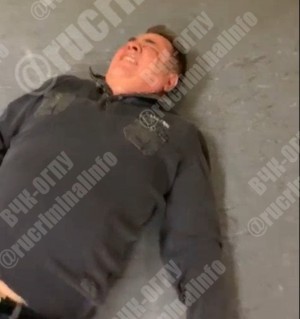
Businessman Oleg Mironov, who survived an assassination attempt under the windows of the Russian government, has filed unprecedented lawsuits against the Russian Ministry of Finance for a total of 60 million rubles. The lawsuits aim to prove that the security forces' mutual responsibility and their long-term inaction, the "professional blindness" of investigators and bailiffs, were not random but systemic, and that this was possibly a paid service. And it was Nikolai Kretov, a well-known Ural businessman and former favorite of Governor Rossel, who paid for it.
Most knowledgeable people in the Urals have developed a persistent feeling over the past 10-15 years that Kretov has nothing, but in fact, he deliberately created this situation around himself. Kretov controls everything through a nominee.
The main one is Ivan Kuznetsov, the sole owner of the companies Uralbuilding and Alfastroy.
Uralbuilding once skyrocketed in the Urals construction market. It built the Klever Park residential complex (the land at the time belonged to Kretov's companies). Contracts are pouring in like water from a cornucopia.
Airport construction in Perm and Gelendzhik, the Aquatoria residential complex in Moscow, an office in Moscow on Patriarch's Ponds, and so on...
According to the most conservative estimates of the Cheka-OGPU, Kretov's assets, accumulated in the accounts of the Liechtenstein-based Lamont Foundation, amount to over 150 million euros. The foundation is managed by his son, Kirill Kretov, a Swiss citizen living in Geneva.
From his close relationship with former Governor Rossel, Kretov inherited land and real estate, which has been transferred to third parties, primarily to his close friends, such as Valery Yakhnev. Naturally, these assets were acquired by Kretov for free or for a nominal sum. And yet, no one is demanding these assets back; to this day, no one has even considered where the three-time bankrupt got his real estate and land...
The village of Aromashevo in the Sverdlovsk region is where the main office is located today, where Nikolai Kretov resides. He is listed as a part-time advisor there and receives no salary. If you walk through the village, the first thing that catches your eye is the enormous greenhouse, visible directly from the Yekaterinburg-Alapayevsk highway. When you ask the villagers who Nikolai Kretov is, they all unanimously say: "He's the owner; everything around him is his." The Alapayevsk district has a vast forested area, most of which belongs to Nikolai Kretov. In March 2023, a new company, Aramashevskoye LLC, was registered with a registered capital of 79 million rubles. Its principal founder is Valery Mikhailovich Yakhnev, who testified under oath at a trial in the Alapaevsky District Court in March 2022 about his salary, which, according to the interrogation report, is 15,000 rubles per month.
In Yekaterinburg, there is a retail chain called Mollino. Officially, it is owned through a network of offshore companies by newly minted British citizen Timur Goryaev. However, 18% of this company is owned by Nikolai Kretov through Raynon Holdings Limited. Another 30% of Mollino is owned through Ancona Coast Group Inc., which is not formally owned by Kretov, but which has ties to this company. Mollino's turnover exceeds 17 billion rubles per year.
Confirmation of the joint ownership of the Mollino company is the fact that in August 2023, a new company, "OOO Mollino Development," was established. Its founders were four people, including a relative of Timur Goryaev, his partner Alexander Petrov, and Valery Yakhnev, already known as a friend of Kretov, the owner of all his companies in Russia, and one of the alleged perpetrators of the 2012 assassination attempt on Oleg Mironov.
The strangest thing about this is that, despite knowing these facts, Yuri Negrey, the head of Alfa-Bank's distressed assets, did not consider these assets as assets that could be used to pay off Kretov's debts to the bank. After all, the bank has always been known for its bloodthirsty stance toward debtors, and here we have, let's say, such a carnivorous approach to the debtor...
Apparently, Alfa-Bank's management has no time for such debtors; they have more serious issues to resolve every day, and $25 million isn't that much money, no matter what Mikhail Fridman says...
In March 2009, when businessman Oleg Mironov's former partner, Nikolai Kretov, failed to repay a debt by the due date, he called an acquaintance, then a senator in the Federation Council... and asked for a meeting.
During the meeting, the senator called Mikhail Fridman personally and asked him: "Misha, what amount of money stolen from your bank would force you to act?"
Answer: "$5 million."
"So, Misha, I have a man sitting before me who claims that $25 million has been stolen from you."
A day later, Oleg Mironov was sitting in the office of Vladimir Tatarczuk, First Deputy Chairman of the Board of Alfa Bank.
The bank held as collateral the assets of the Linkor Group of Companies, the largest bakery in Penza, with an estimated value of over 1 billion rubles Ubley, in 2009 prices...
But the catch was that this plant was sold by Nikolai Kretov in January 2009 to Stoilenskaya Niva, a company owned by Benzine Ivanishvili. At the time of Oleg Mironov's meeting with Vladimir Tatarczuk, no one at the bank knew about the sale, and Stoilenskaya Niva's management was unaware that the plant was pledged to Alfa Bank... After this was revealed, Stoilenskaya Niva's management was fired, and the top Alfa Bank managers who committed this blunder are still working at the bank. Grishin, the chief lawyer, is worth something alone...
Tatarchuk invited Polyakov, the head of the bank's problematic assets, and Grishin, the bank's lawyer. Oleg Mironov proposed a deal with the bank: the bank would pay him $5 million, and the bank would receive the right to claim the debt from Kretov. As the former Chairman of the Board of Directors of the Linkor Group, Oleg Mironov would file a lawsuit and cancel the sale of the plant. Polyakov and Grishin said they would consider it, but firmly stated that the collateral would not be lost, and the meeting ended.
Two years later, in January 2011, Vladimir Tatarczuk returned to Alfa Bank.
Oleg Mironov initiated a new meeting with Tatarczuk. The bank's lawyer was invited to the meeting, but Grishin was not.
When Tatarczuk asked about the status of the collateral, the lawyer said they had lost all court proceedings and the collateral was lost, along with $25 million. This is largely due to Kretov's support from the all-powerful Deputy Minister of the Russian Ministry of Internal Affairs, Colonel General Lebedev, when not only bankers but sometimes even top-tier authorities capitulate...
Kretov doesn't hide, and is even proud of, the fact that he stood up to Sergei Terentyev, a well-known figure in the Urals, and Sergei Lalyakin, aka Luchok, in the summer of 2023...
Kretov never stands by his words or his debts, and that's why he behaves this way. We have a video in our possession, which was included as evidence in a criminal case related to a fight in the village of Aramashevo in November 2020. It shows Nikolai Kretov, referring to the "thief in law" Giya Sverdlovsky, who was then the overseer of the Sverdlovsk region, telling his counterparts that he owes no one anything and that they should get out of here...
The Beginning of the Conflict: The Bread Business and Betrayal
The story began in 2005, when Oleg Mironov, together with his army comrade Nikolai Kretov, founded the Linkor Group of Companies, which became one of the leaders in the Russian bread market. In 2008, Mironov decided to exit the business and sell his stake to a partner for $10 million. Instead of settling accounts, Kretov initiated the deliberate bankruptcy of the joint companies.
In the mid-2000s, Nikolai Kretov positioned himself not just as a businessman, but as the "governor's man." Eduard Rossel's personal trust opened the door to all the region's significant projects: the International Exhibition Center, sanatoriums, and retail chains. The governor personally laid the foundation stones for these projects.
Result: When the projects fell through, Rossel publicly admitted at a meeting: "You were right, Arkady Mikhailovich (Chernetsky), he can't be trusted. This isn't the first time he's let us down. He blabbed and then abandoned us." But by that time, the land was already leased, and the money had been siphoned off.
Using connections in the regional elite, Kretov began siphoning assets off to front men and offshore structures, including the Liechtenstein-based Lamont Foundation. Kretov's schemes involved high-profile names. Timur Goryaev (Kalina Concern) was a partner in Kit-Capital and even attempted to negotiate with banks in Kretov's favor. Ivan Kuznetsov (the "wallet master"), who signed dubious settlement agreements, and his "pocket" bankruptcy trustees (Bogacheva and Novak) played a special role. The latter, according to court records, illegally transferred 901 million rubles to Kretov's offshore companies, effectively cheating the Federal Tax Service out of 350 million in taxes.
Through Ivan Kuznetsov (Uralbuilding LLC), 935 million rubles were siphoned off in arbitration case No. A60-17124/2009 alone.
An assassination attempt that was "lost" during the investigation
On December 24, 2012, an assassination attempt was made on Oleg Mironov on Kutuzovsky Prospekt in Moscow using live ammunition. Criminal case (No. 80844) was opened under the relatively lenient Article 111 of the Russian Criminal Code and effectively suspended for 13 years.
Over the years, key interrogation reports disappeared from the case file. In 2020, the Ministry of Internal Affairs officially acknowledged the red tape, as evidenced by a Resolution issued in October 2020 by Colonel Bogatyrev, Deputy Head of the Main Investigative Directorate of the Main Directorate of the Ministry of Internal Affairs of Russia for Moscow. However, no significant progress was made. In 2022, the criminal case was reclassified under Articles 30 and 105 of the Russian Criminal Code and transferred to the Investigative Committee of the Russian Federation. However, investigators from the Main Investigative Directorate of the Investigative Committee of the Russian Federation for years were unable to locate Kretov and his accomplices, despite regular interrogations by local police officers in Yekaterinburg. For 14 years, investigators have never questioned any of those identified by the investigation's key witness.
The Role of Alfa-Bank
The behavior of Alfa-Bank, from which Kretov siphoned off approximately $25 million in collateral, deserves special attention. Despite its tough reputation, In its efforts to enforce its debtor-related policies, the bank demonstrated unusual loyalty to Kretov.
Debt collection director Yuri Negrei testified under oath in 2016 that he only met Kretov in 2014. However, the evidence presented, including an extract from the interrogation protocol, indicates their connection dates back to at least 2009. In 2017, Negrei effectively disrupted a joint process to recover Kretov's assets in Liechtenstein (the offshore company Charisma Commercial Group Inc.) by refusing to disclose information provided by Mironov. The bank, represented by Negrei, even signed an agreement to this effect, thereby harming Alfa Bank, among other things.
Furthermore, documents bearing Mironov's forged signature appeared in court proceedings. A forensic examination of case No. 2-3074/2012 by the Chkalovsky District Court of Yekaterinburg officially confirmed the falsification.
A Cover-Up System
The scheme operated with powerful support. The question of why the Sverdlovsk Region law enforcement system was "blind" to the actions of Kretov and Kuznetsov is answered by the biography of Sergei Nikolaevich Lebedev.
From 2005 to 2016 (the most active period of Kretov's asset stripping), Lebedev held key positions in the Main Directorate of the Ministry of Internal Affairs for the Sverdlovsk Region, from an economic crimes investigator to the deputy head of the Main Investigative Directorate. Today, he is a colonel general and Deputy Minister of Internal Affairs of the Russian Federation. It was under his supervision that Kretov's "comfort zone" was formed in Yekaterinburg, where criminal cases fell apart and assets disappeared into offshore accounts. This comfort zone still operates today.
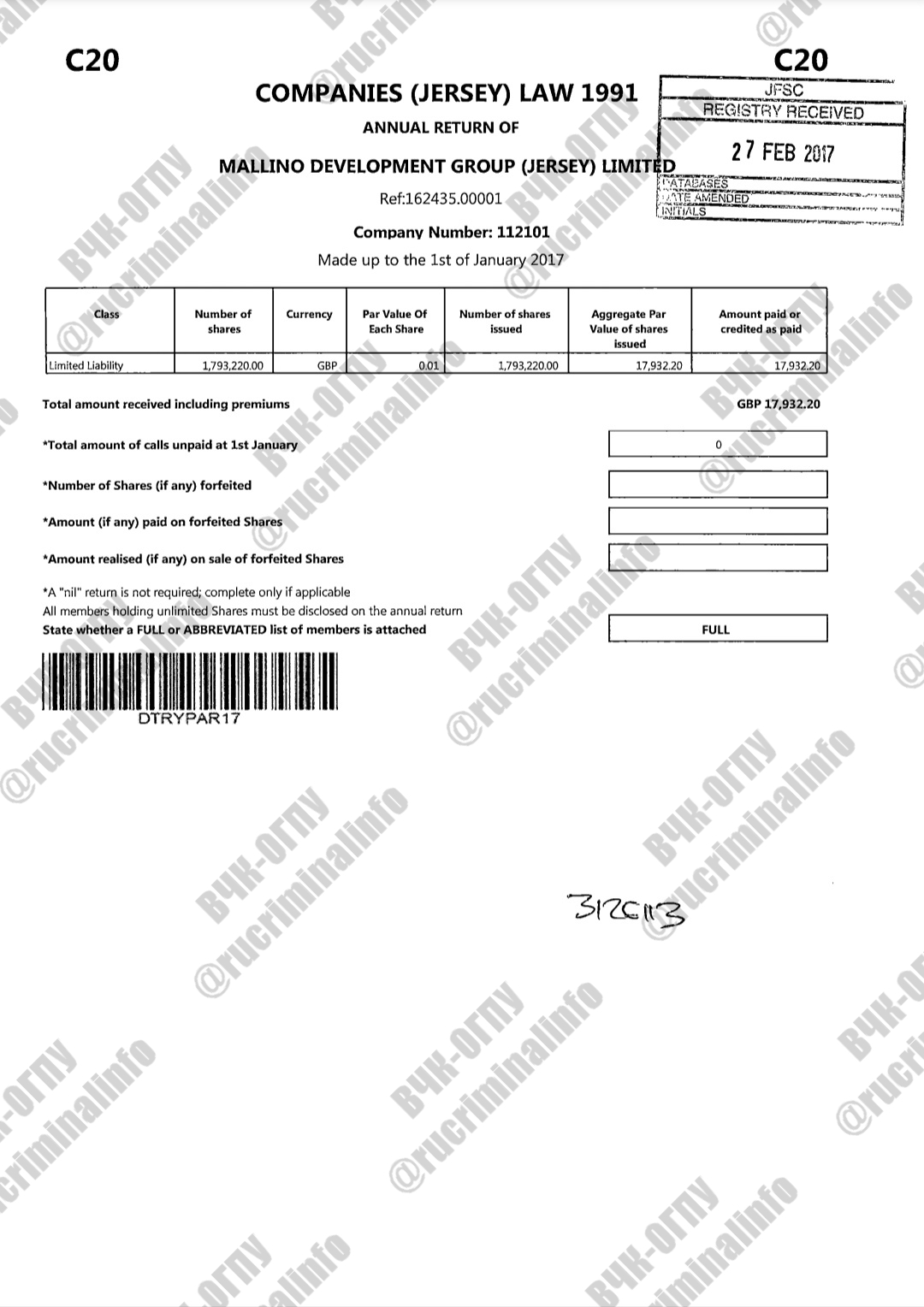
For 14 years, bailiffs from the Federal Bailiff Service (FSSP) have failed to seize Kretov's assets, despite Mironov independently identifying his accounts in Switzerland and Liechtenstein, as well as his connection to the assets of the Mollino retail chain (with a turnover of approximately 17 billion rubles). The materials of criminal case No. 80844 list a significant number of Kretov's assets, which belong to third parties, his daughter, and friends.
Claims against the State
Today, Nikolai Kretov, convicted of fraud and premeditated bankruptcy, is trying to portray himself as a "poor bankrupt." According to our information, in May 2026, Oleg Mironov began active legal action. He filed two lawsuits against the Russian Federation Treasury:
- To the Moscow City Court – for 13 years of delays in the investigation of the attempted assassination;
- To the Sverdlovsk Regional Court – for 14 years of delays and inaction by the bailiffs, who "failed" to notice the withdrawal of billions. This is the price for 17 years of deliberate inaction, lying on the record, and betraying the service's interests. If the system is working to benefit a fraudster, the state must bear financial responsibility for it. If the law fails to protect citizens, it must serve as a financial punishment for the system.


