


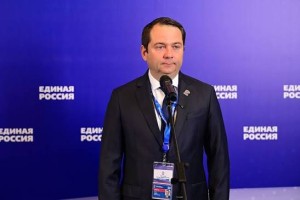
VChK-OGPU and Rucriminal.info continue to publish their investigation into how Governor Andrei Chibis turned the Murmansk Region into one of the most corrupt regions in Russia. He and his right-hand man, Ashot Bablumyan (former head of the Murmansk Region government representative office, arrested on charges of illegally siphoning 1 billion rubles from Russia), created an octopus whose tentacles extended literally into every budgetary stream.
To commit corrupt acts, Chibis and Bablumyan recruited officials from relevant departments of the Primorsky Krai Municipal District and heads of district administrations. One of the main venues for embezzling budget funds remains the Murmansk administration, headed by Chibis' confidant, Yuri Serdechkin. As head of the administration, Serdechkin plunged the city into total corruption. All materials are available on the website Rucriminal.info. These include heated bus stops (already rusted and inoperative) for the southern regions at the price of a two-bedroom apartment, repaired roads whose asphalt peels off in the spring along with the snow, unfinished but officially accepted urban improvements, the urban collapse during winter cleanup, and the complete collapse of the housing and utilities and housing and public utilities systems. All of this is confirmed by criminal cases against the director of the housing and public utilities department and other administration officials.
Serdechkin signed resolutions accepting construction and road work from the companies of Oganes Shankoyan and Andranik Musatyan (Bablumyan's associates), with whom he had a business partnership. He lived with one of them in neighboring dachas, and shared a hookah with the other using a cold pipe. In addition to the proceeds from corrupt dealings, former head of the Murmansk Municipal Administration, Yuri Serdechkin, received a bribe from Oganes Shankoyan, a guest house for permanent residence in the recreational forest area of the Severnaya Usadba community, where schemes were discussed and kickbacks were exchanged for accepted work. In mid-2025, Serdechkin began to realize what Chibis had dragged him into, resigned his position as head of administration, and immediately fled Murmansk.
Chibis, Bablumyan, and Musatyan replaced Serdechkin with a new, even more incompetent head of administration. Lebedev, a native of Olenegorsk, had previously been promoted to first deputy head of administration from his position as head of the Olenegorsk administration. To further control Lebedev and facilitate corruption schemes, Andranik Musatyan was brought in by Chibis and Bablumyan. Lebedev was tasked with the classic tasks of the schemer Chibis: signing the head of administration's decrees without appeal, appointing people to key positions approved by Musatyan and Bablumyan, accepting and terminating contracts at the behest of the authorities, selling and distributing municipal land to Armenian clans, and legalizing the construction of commercial properties for the Armenian diaspora that don't fit into the city's architectural balance. This is something that Ivan Lebedev, a member of the criminal organization and head of the Murmansk administration, is handling.
After the start of large-scale arrests in the region, former head of the Murmansk administration, Yuri Serdechkin, realizing that his activities were completely integrated into corruption schemes, persuaded Chibis to help him secure a federal position for mutual self-preservation. Following negotiations, on May 12, Serdechkin was appointed Deputy Minister for the Development of the Far East and Arctic. Chibis and Serdechkin now hope that their special subject status will allow them to avoid criminal liability and make it more difficult for law enforcement agencies to investigate the former head of the Murmansk administration should questions arise. And they already have.
Investigators are increasingly suspecting complicity in Andrey Chibis's criminal organization, not only among those responsible, but also among those who allocated budget funds, held meetings, drafted and signed resolutions, and issued instructions, including the regional headquarters that operated during and after the COVID-19 pandemic. Its work was coordinated by Oksana Demchenko, the first deputy governor. In total, investigators are looking into dozens of suspects.


