


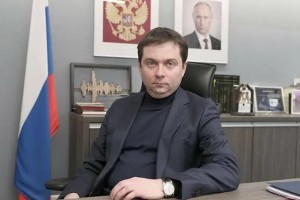
When Andrey Chibis was appointed Governor of the Murmansk Region, local elites assumed that this federal official had arrived from Moscow merely for a brief, performative stint before returning to the ranks of the federal administrative elite. As time has shown, they were all mistaken.
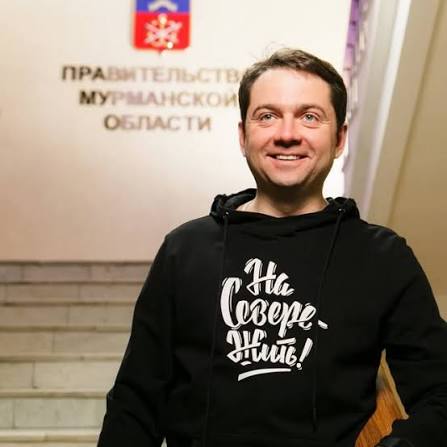
Andrey Chibis arrived in Murmansk effectively empty-handed. His initial efforts to siphon funds from the regional budget involved awarding bonuses to his own deputies—bonuses that were then returned to him in cash-filled envelopes. These funds were subsequently used to purchase a house on the Tuloma River, registered in the name of his trusted associate, Ashot Bablumyan. Together, Chibis and Bablumyan engaged in what amounted to "industrial espionage" within their professional sphere: they gathered intelligence from local elites and business circles regarding lucrative, high-margin opportunities. They would then pass these identified prospects on to ethnic Armenian networks, which were organized and coordinated by Ashot Bablumyan. Bablumyan brought in his own lieutenants—Oganes Shankoyan and Andranik Musatyan—who, in turn, began building their own networks, comprised of various commercial entities and government officials under their control. According to a source for VChK-OGPU and Rucriminal.info, after Chibis abandoned all sense of decency, brought in a network of unsavory characters, and—along with his accomplices—plunged into unrestrained misconduct, his team was warned that their arrangements with regional law enforcement would not save them. They were told that a task force of federal security officials would eventually arrive in Murmansk, and that everyone involved would have to answer to the law for their actions. Chibis, however, did not react; he merely signaled that he—along with his team—was "untouchable," thanks to the protection he allegedly enjoyed at the federal level from Kozak and Kiriyenko.
Years later, on March 12, 2026, authorities began arresting individuals linked to the corruption network operated by Chibis and Bablumyan—including Oganes Shankoyan, former Murmansk Region Ministers of Construction, various lower-level officials, and personnel from companies owned by the Shankoyans.
A contingent of over 50 law enforcement officers—comprising military investigators, investigators from the Russian Interior Ministry’s Investigative Department, and investigators from the Investigative Committee of Russia—arrived in the Murmansk Region. The investigation centers on a variety of corrupt schemes, including the siphoning off of state budget funds and the freezing of residential buildings in Pechenga—which housed the families of military personnel—due in part to the supply of substandard coal by "Aquarium," a company owned by Shankoyan. The public utility infrastructure in the Pechenga District had been driven to the point of collapse, a situation attributed to the district head, Andrey Kuznetsov, and the former executives of "PromVoenStroy," Armen Arshakyan and Alexander Kobytsev. Ultimately, all those implicated in the Pechenga case were taken into custody and transported to Moscow. Another organized group siphoned budget funds—allocated for capital repairs at a "Center for Identifying Talented Children"—into offshore accounts. The funds had been granted to "Sever Stroy," a company owned by Oganes Shankoyan. The individuals behind this embezzlement scheme included Oganes Shankoyan, Ashot Tetavosyan (a trusted associate of Ashot Bablumyan), Sergey Voskanyan, and Oganes Gevorkyan.
Acting in coordination with the Governor of the Murmansk Region, Chibis, Ashot Bablumyan devised a scheme to move budget funds abroad through fictitious contracts with a company based in Kyrgyzstan. The primary channel for this operation was disguised as the procurement of road-construction machinery. A total of 49 transfers, amounting to billions of rubles, were made to the accounts of a company called "Asiyatranstravel." The signatures on the contracts proved to be forged, and the machinery never arrived in Russia. Ashot Tetavosyan, while serving as the acting director of "Sever Stroy," used electronic access keys to funnel the budget funds—including federal allocations—to Kyrgyzstan. Following the commencement of the investigation, Tetavosyan managed to flee to Armenia, while his accomplices, Voskanyan and Gevorkyan, were apprehended and transported to Moscow.
According to sources from VChK-OGPU and Rucriminal.info, in addition to large-scale international transfers, Oganes Shankoyan laundered budget funds by converting them into cash through a network of shell companies—a fact documented by investigators. This was done to evade taxes and facilitate the personal use of illicitly acquired capital, including the purchase of luxury goods, high-end vehicles (such as Mercedes-Maybachs), and real estate and land plots in Sochi, registered under the names of proxies and trusted associates. Oganes, with the support of his brother—who had a prior conviction for bribing a judge—funneled budget funds between their various companies under the guise of loans. Mesrop Shankoyan would then launder these cash proceeds by purchasing cryptocurrency, real estate in St. Petersburg, luxury goods, and high-end suburban properties. Furthermore, funds were channeled into infrastructure projects—a scheme facilitated by accomplices through a network of shell companies—to further launder and legitimize the money. In addition to siphoning off budget funds, the pair also utilized a regional passenger transport (minibus) business, which consistently generated significant amounts of off-the-books cash. This was supplemented by hundreds of millions in government subsidies, obtained from the Murmansk Region administration specifically for these regional passenger transport operations. Funds were cashed out and embezzled in collusion with Balumyan and Chibis. A criminal case was initiated several months ago; Mesrop Shankoyan spent some time abroad while on the federal wanted list for a large sum of unpaid taxes. After "resolving the issue," he returned from abroad to St. Petersburg, from where he now coordinates the activities of his own companies and those of Oganes Shankoyan in Murmansk. He also uses a shared fund (*obshchak*) and cryptocurrency wallets to finance various emerging needs or issues.
To be continued.


