


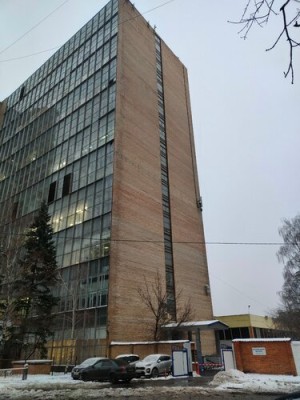
The Cheka-OGPU and Rucriminal.info learned of a major incident at the closed Polyus Research Institute in Moscow: yesterday, unknown individuals armed with knives attacked employees of the defense plant right at the checkpoint. At least two people are known to have been injured, both scientists developing advanced weapons.
As our project has discovered, yesterday, as leading employees of the research institute were leaving the checkpoint, unknown individuals attacked them and inflicted multiple stab wounds. The incident was immediately classified, and FSB officers were stationed at the Polyus Research Institute building in the southwest of the capital all day today. Security at the checkpoint has been tightened, and employees have been informally informed of necessary security measures.
According to eyewitnesses, two young men attacked the research scientists. The attackers were armed with knives and filmed the incident.
The Cheka-OGPU and http://Rucriminal.info are publishing information about the victims of the incident.
Seventy-year-old Vladimir Simakov sustained the most serious injuries. The research institute's website states that in 2014, on Gunsmith's Day, he was awarded the S.I. Mosin Prize at the Tula State Arms Museum. This is one of the oldest Russian awards in the field of military research and development. Simakov held the position of First Deputy General Director and Chief Engineer at the time.
The second victim was 70-year-old Alexander Lobintsov, an employee of the secret research institute. He managed to react to the attack and defended himself with his briefcase and hands, suffering minor cuts. The scientist is the co-author of several patents and scientific and technical developments that are directly related to defense applications.
The Polyus Research Institute named after M.F. Stelmakh is one of Russia's key centers for the development of laser technology and optoelectronics. The institute is part of the Shvabe holding company, part of the Rostec State Corporation. A significant portion of its work is conducted for the defense industry: the institute designs laser guidance systems, rangefinders, optoelectronic sight components, and sensors for high-precision weapons.
Polus Research Institute's developments are used in modern weapons systems. Specifically, similar components are used in anti-tank missile systems, aircraft targeting and navigation systems, tank fire control systems, and the optoelectronic stations of helicopters and drones. Laser rangefinders, target designators, and photoreceiver modules of this type are used in systems such as the Kornet and Krasnopol, aircraft targeting systems, and various reconnaissance and strike UAVs. New modules are used in modern missile systems.


