


As reported by VChK-OGPU and Rucriminal.info, AZUR Air is up to its old tricks again. It's attempting to fly an aircraft with expired components, whose technical integrity is questionable, and which is simply dangerous for passengers. In the spring, AZUR Air nearly lost its license for operating aircraft with faulty components. And now it's happening again.
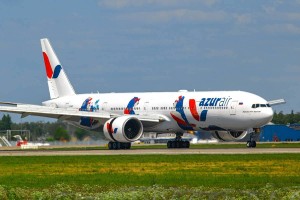
According to a source, AZUR Air's management wants to return a wide-body Boeing 777, which has been idle for a long time, to service. It's currently stored in a hangar awaiting its return to service. It's needed for the charter program. Engineers have serious doubts about the service life of certain components of the emergency evacuation system (slides, spoilers, actuators, and squibs, which are supposed to automatically deactivate the appropriate systems for the safe deployment of the slides during an emergency evacuation). For example, the SPOILER AUXILIARY RETRACT DEVICE PYROTECHNIC CARTRIDGE part number 13126100, as well as various SQUIBs and other aircraft components. Engineers believe these components must be removed for maintenance, overhaul, or replacement.
According to established procedures, if a component's service life has expired or its status cannot be confirmed, this cannot be considered a formality: it is necessary to determine whether its continued operation is permitted and what actions are prescribed by the technical documentation and applicable regulations.
Engineers insist that the aircraft must not be released for flight until all necessary checks have been completed and the equipment's serviceability confirmed. It is simply dangerous.
But the airline's management insists that the missing documents must be fabricated and an operating permit and airworthiness certificate obtained from the Federal Air Transport Agency (Rosaviatsia).
This is the insistence of AZUR air CEO Shukhrat Ibodov, who was recently featured on our project.
He also has the help of his favorite pilot, Deputy Head of Flight Services Kadyrov, whom he once invited to join the company and who has close ties to Rosaviatsia.
A charter company may have hundreds of reasons to rush: the season, contracts with tour operators, or the downtime of an expensive aircraft. But for passengers, something else is more important: ensuring that every flight is operated on an aircraft approved for operation based on reliable documents and actual work performed. Safety shouldn't depend on how influential someone is demanding "the flight be on time."
Therefore, the control system must withstand pressure. If it works, questionable decisions are stopped before they become a threat. If it doesn't, the question is no longer just about one flight, but also about who is responsible for safety and how passengers can be sure that the rules are being followed.
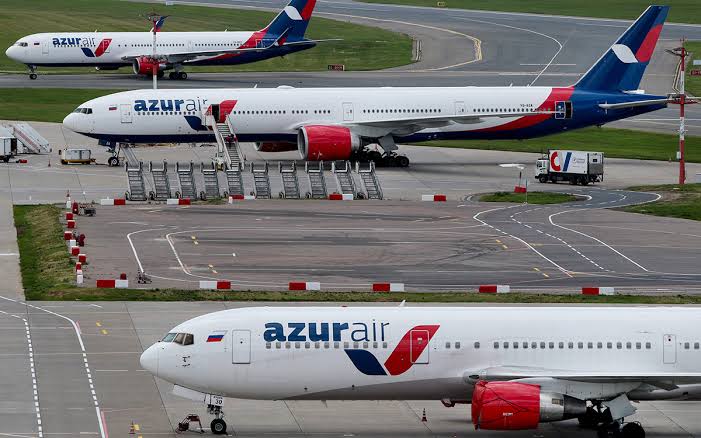
Azur Air's serious problems began back in 2025. Its fleet consists primarily of Boeing 767s, and the average age of the fleet is about 28.9 years. Due to sanctions, providing high-quality maintenance for Boeing aircraft and obtaining spare parts became nearly impossible. In 2025, Azur Air aircraft began experiencing increasingly frequent technical problems. As a result, some Boeing aircraft had to be retired by the end of the year, leading to hours-long flight delays and widespread passenger complaints in early 2026. However, even the remaining aircraft experienced constant emergencies. On January 23, a flight from Phuket, Thailand to Barnaul made an emergency landing in China, and on January 28, the same aircraft on a flight from Nha Trang, Vietnam to Irkutsk made an emergency landing in Hanoi, Vietnam, due to an oil leak. In early February, another aircraft, a Boeing 767, returned to Phuket due to landing gear retraction issues. And on February 27, a Boeing 767 flying from Fukuoka, Japan, to Kazan experienced an engine surge, accompanied by popping sounds and flames. The list goes on.
On March 15, Rosaviatsiya restricted Azur Air's air operator certificate due to systemic aircraft maintenance violations identified by Rostransnadzor.
However, the company's management managed to resolve the issue.


