


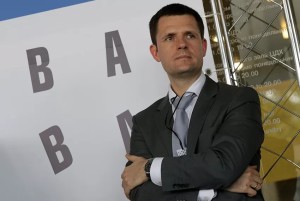
The architect of Moscow's "infill development," Sergei Kuznetsov, has been dismissed. The order was published on the website of the Moscow Mayor and Government. According to the Cheka-OGPU and Rucriminal.info, during his nearly 14 years in office, he amassed a substantial fortune that would make even some corrupt Defense Ministry generals look like budding pickpockets. The scheme devised by Kuznetsov and his business partner, Dmitry Desyatnikov, will allow both to live comfortably, without worrying about retirement. And most likely, not in Russia. Moreover, their third longtime colleague from the SPiCh architectural bureau, Sergei Tchoban, is already enjoying a lucrative position in Germany: he has a substantial architectural business there, specifically Tchoban VOSS Architekten GmbH.
The Kuznetsov-Desyatnikov scheme, dubbed the "gray cardinals" of Moscow's construction industry, is as simple and reliable as concrete. It allowed developers to conceal the actual square footage of apartments in new buildings and populate neighborhoods with 30-40% more residents than approved in urban development plans. This is precisely why the capital's new districts are experiencing shortages of clinics, kindergarten spaces, parking, and transportation capacity: they were initially designed for fewer residents than they actually have to cope with. In fact, Kuznetsov and Desyatnikov imposed a huge burden on the city budget, funding infrastructure for tens of thousands of "additional" apartments not envisaged by the urban development plan. And for each "extra" square meter, buyers pay a significant amount of money for the developers and architects of this scheme. It is believed that Kuznetsov and Desyatnikov earned up to 3-5 billion rubles annually from this scheme. It's no coincidence that Desyatnikov moved from a mansion on Rublevka to a 1.2 billion ruble apartment in the Granatny Palas residential complex—the same place, for example, where the first wife of Gazprom Neft CEO Alexander Dyukov and his daughters live.
By all rights, in a new building, the ratio of the total floor area in the dimensions of external walls (TFA, which is the sum of all the areas in the building, including staircases, basements, attics, etc.) to the saleable area (apartment) is between 0.6 and 0.7. The TFA determines the developer's payments to the budget and the parameters of the social and transport infrastructure of the area. At the same time, the developer cannot sell 30% to 40% of the area to anyone—these areas are corridors, staircases, and other similar "square meters." Of course, it's profitable for the developer to reduce this percentage and increase the area of the apartments, but it's impossible to build a high-rise building without staircases and corridors. However, Moscow's chief architect, like a true magician, found a way to solve the problem: he could simply falsify the total area of residential buildings in architectural and urban planning approval certificates (AUPs) by simply adjusting the figures to match those in the site plans. So, for every square meter approved by the Moscow mayor, Kuznetsov added approximately a third of his own, while his cashier, Desyatnikov, received bribes from developers in cash or profit shares. MR Group, FSK, Sminex, Level Group, Granel, Mangazeya, and many others were implicated in these scams.
In the construction industry, these tricks were dubbed "Coefficient D," perpetuating Desyatnikov's name for future generations. How many such new buildings were erected in Moscow during the "Kuznetsov era"? Perhaps investigators will one day reveal this figure. Moreover, we don't have to look far for examples.
In the King & Sons residential complex on Mosfilmovskaya Street (an October Group project), designed for 117 apartments, the total floor area, including exterior wall dimensions, is 9,995 square meters. However, the area of apartments and common areas, according to the project declaration, is 11,200 square meters—and this doesn't even include balconies, terraces, usable roofs, walls, shafts, and other areas. This is 1,200 square meters more than the entire above-ground area of the building permitted by Sobyanin. The actual area of King & Sons, including exterior wall dimensions, is approximately 14,000 square meters, but Kuznetsov added 40% using "Coefficient D."
The same picture is seen in the elite Lavrushinsky residential complex (developer Sminex), with views of the Kremlin, where a square meter costs over 3 million rubles. The architectural concept was developed by Kuznetsov's own bureau, SPiCh. Here, the total floor area, including the dimensions of the external walls, is 33,100 square meters, the total above-ground area is 27,709 square meters, and the area of the apartments in the complex is 25,401 square meters, or 92% of the total above-ground area, so the area of common areas is equal to, on average, 5% of the total floor area. This means millionaires will have to squeeze sideways to get to the luxury apartments. In fact, according to architectural plans signed by Kuznetsov's long-time partner, Sergei Tchoban, the corridors in the building are wide, so the documentation understates these figures by a factor of three, and by a factor of ten for the lobby group. If we follow standard standards and use a coefficient of 0.6, then the area of "Lavrushinsky" including the dimensions of the external walls is 42,000 square meters. In fact, an extra almost 10,000 The project's square meters will bring in approximately 15 billion rubles to the beneficiaries.
River Park Kutuzovsky (a corporation owned by billionaire Roman Trotsenko, AEON) also applied "Coefficient D," meaning the total residential area is 167,000 square meters, almost 20,000 square meters more than the city plan allows, even taking into account walls and shafts. Overall, these schemes will net the developer and his friend in the mayor's office (the Trotsenko family is friends with the Kuznetsovs and Desyatnikovs) over 30 billion rubles. And these are just the projects currently underway—how many thousands of square meters were delivered and sold before that?
Rumors of Kuznetsov's resignation have been circulating for a long time. And it's unlikely he left his post voluntarily.


