


The Cheka-OGPU and Rucriminal.info uncovered a truly astonishing story. A regional firm unexpectedly became one of the country's leaders in fur sales to the West. In its home region, it even surpassed Gazprom's local subsidiaries. It has now been revealed that all the deals were purely on paper, and the firm was part of a massive money laundering and money transfer system.
At the end of February, in the bankruptcy case of MekhExport LLC (Yoshkar-Ola), the court clarified the subsidiary liability of its former founder and director, Natalya Busygina—she must pay over 145 million rubles. Busygina is currently running a loss-making cosmetics business and is unlikely to have such a sum. It's possible she could reveal many interesting details about MekhExport's foreign trade operations, which ultimately owes the Federal Tax Service over 400 million rubles. Busygina was the sole founder of MekhExport and the company's director from 2010 to 2013, when she was replaced by Natalya Shegunova. The Federal Tax Service is also demanding tens of millions of rubles from her.
As it turned out, the company handled funds unrelated to furs, and was a participant in a so-called "proxy platform" that provided money laundering services to wealthy individuals and companies.
The scheme was simple and reliable. According to the documents, MekhExport purchased furs from Russian producers—the Borovichi Tannery and the Borovichi Leather and Fur Factory—and then sold them abroad. Business was profitable, and in 2015, MekhExport ranked among the best companies in Mari El, even surpassing the local Gazprom Gas Distribution Company.
Having reported to the Federal Tax Service its enormous turnover and trade with foreign partners, MekhExport applied for a VAT refund. The proceeds went into several accounts, including the Spanish company PLUMARIA SHOPS S.L., managed by Russian citizen Irina Eremenko and MekhExport's deputy general director, Alexander Katarzhnov. Both were listed as top managers at another Spanish company, MUNDO PIEL & CUERO SL, owned by Tatyana Matrosova, Katarzhnov's wife. They were married in late 2012, and according to the terms of their prenuptial agreement, Katarzhnov registered a 132-square-meter apartment on Mytnaya Street in Moscow's prestigious English Quarter in his wife's name.
In addition, MekhExport transferred millions of dollars to the Slovakian VIA MONTENAPOLEONE SLOVAKIA s.r.o. and the British IWC TRADING LLP. The latter's founders were initially 27-year-old (at the time) Reutov resident Liliya Velichko and 21-year-old Muscovite Nadezhda Koshkareva. The company was later renamed KOREL TRADING LLP and transferred to two Seychelles offshore companies: Chambers Directors Ltd. and Chambers Secretaries Limited. According to the Panama Papers leaks, these firms managed a vast network of offshore companies with ties to Russia, whose beneficiaries were hidden behind bearer shares, while the formal owners were nominees. For example, the owner of METALLIC IMPEX CORPORATION (BVI) turned out to be Alexander Fomenko, an employee of a Moscow McDonald's, and NAFTA VOSTOC LTD. and DOMENICA ASSOCIATES LTD. were registered to Albert Gashimov, the "owner" of Moscow-based TD UNITEK LLC (liquidated in 2021), which never reported to the Federal Tax Service. This network also includes the Bahamian ROSSI UNION TRADING INC, which is owned by 10 secret shareholders with bearer shares. This means that funds from MekhExport were funneled into a large-scale offshore scheme.
Despite top managers' assurances in court that the company's operations were normal, MekhExport engaged in fictitious transactions whose primary purpose was money laundering. For example, in 2014, according to documents, MekhExport sold €817,000 worth of skins to TXM TRADE, a company that claimed to be Latvian. MekhExport, however, instead of accepting foreign currency, agreed to accept payment in finished fur coats, which were allegedly located in a warehouse in Bratislava owned by Dorset consulting s.r.o., and then exchanged the coats for promissory notes to Moscow-based Kvins-Torg LLC. The skins and coats turned out to be virtual (the stated manufacturers physically lacked the capacity to supply such volumes), and there is no such company as TXM TRADE in Latvia. Kvins-Torg turned out to be a typical shell company—its sole founder was a previously convicted Muscovite who didn't even know he had become a businessman. In total, about 20 companies across Russia were registered in his name (without his knowledge).
In fact, MekhExport's counterparty, TXM TRADE, was registered in New Zealand, but its director, IntaBilder, was actually from Riga. This is a truly epic figure, who operated several laundromats, and her companies are deeply entangled in money laundering schemes. Specifically, in the 2000s, she headed a group of 18 shell offshore companies, the beneficiary of which was Unihold Ltd., registered to a homeless man named Eriks Vanagels from Riga. In total, he "owned" several dozen companies, including Ireland & Overseas Acquisitions Limited and Milltown Corporate Services Lim. British journalists have linked these companies to the laundering of Viktor Yanukovych's funds.
Inta Bilder wasn't idle. By 2009, she had already become the head of Jetfield Networks in New Zealand, which became an active participant in the so-called "Azerbaijani Laundromat." It was during this period that Inta Bilder's operations with the Mari-based MekhExport occurred.
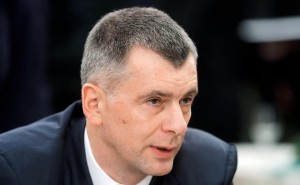
Jetfield Networks is known to have laundered $105 million. The company's beneficiary was Azerbaijani citizen Javid Huseynov, the owner of another Laundromat participant, Larkstone Ltd. from Estonia. Both companies were used to purchase luxury goods for Azerbaijani elites. In 2020, it was revealed that Jetfield Networks was servicing the Russian bank International Financial Club, which was owned by Mikhail Prokhorov (47.8%) and Ekaterina Ignatova, the wife of Sergei Chemezov (6.5%). So, the Russian company's appearance as a participant in the scheme was no accident. Of course, tens of millions of dollars and euros didn't end up in the hands of MekhExport's top managers, who have so far chosen not to disclose the company's actual role in the Laundromat scheme. However, if they are held subsidiarily liable, some may have a strong incentive to speak out.


