


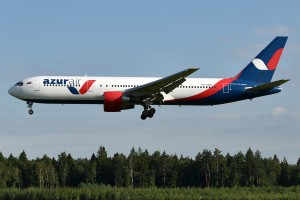
The war in Iran could finally finish off Azur Air, Russia's already struggling largest charter carrier. In mid-March, Rosaviatsiya (Federal Air Transport Agency) restricted the airline's air operator certificate due to engine and component failures on Azur Air aircraft "becoming systemic." Since then, the airline has been canceling and rescheduling flights one after another. Azur Air had previously hoped that reliable engines for its Boeings would come from Iran, where the airline had been carrying out engine repairs due to sanctions. However, after the war began, it became clear that Azur Air would not receive repaired engines. Against this backdrop, the offer to purchase the airline from Wildberries, which owns its own tour operator, seems somewhat odd. Apparently, Azur Air has enough serviceable aircraft for one tour operator.
Azur Air's serious problems began back in 2025. Its fleet consists primarily of Boeing 767s, with an average fleet age of approximately 28.9 years. Sanctions have made it nearly impossible to properly maintain Boeing aircraft and obtain spare parts. In 2025, Azur Air aircraft began experiencing increasingly frequent technical problems. As a result, some Boeing aircraft had to be retired by the end of the year, leading to hours-long flight delays and widespread passenger complaints in early 2026. However, even the remaining aircraft continue to experience emergencies. On January 23, a flight from Phuket, Thailand, to Barnaul made an emergency landing in China, and on January 28, the same aircraft on a flight from Nha Trang, Vietnam, to Irkutsk made an emergency landing in Hanoi, Vietnam, due to an oil leak. In early February, another Boeing 767 returned to Phuket due to problems with the landing gear. And on February 27, a Boeing 767 flying from Fukuoka, Japan, to Kazan experienced an engine surge, accompanied by pops and flames. The list goes on.
As its fleet is forced to downsize, Azur Air announced a planned 10% workforce reduction, including pilots and flight attendants.
On March 15, Rosaviatsiya (the Federal Air Transport Agency) restricted Azur Air's air operator certificate due to systemic aircraft maintenance violations identified by Rostransnadzor.
Following this, Azur Air began early cancellation of flights to Thailand from Moscow, Samara, Ufa, Yekaterinburg, and Barnaul. However, the situation with other destinations is no better. Passengers complain about the constant postponement of Azur Air flights from Moscow, Kazan, and other cities to Vietnam (and back), which either shortens or extends their vacations. Passengers receive virtually no compensation for their financial losses. Currently, more than 40% of the airline's flights are delayed.
However, it's worth noting that the tough stance and decisions of Rosaviatsiya and Rostransnadzor coincided with Wildberries, which recently owned the tour operator Fun&Sun, making an offer to purchase Azur Air. Most interestingly, Azur Air's summer charter program is tailored exclusively to Fun&Sun.
For a tour operator, having its own airline is a very attractive asset.
The aviation market is discussing an unexpected version of events surrounding Azur Air. Formally, the carrier is under significant pressure from the regulator due to widespread flight delays, and Rosaviatsiya has already threatened to revoke its air operator certificate by June 8. However, there is growing speculation in the industry that the carrier's problems may coincide with the interest of a major buyer—the Wildberries marketplace.


