


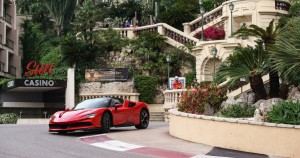
Back in March, Monaco's tranquil façade was shattered by a sudden tragedy. A €300,000 Ferrari 296 GTB crashed into a barrier while speeding through the Louis II Tunnel at 190 km/h; a teenage passenger was hospitalized.
Kristina Rusavina, a 38-year-old Anglo-Cypriot socialite originally from Chechnya, was driving, and her 14-year-old daughter was with her. Despite the force of the impact, miraculously, there were no casualties.
A Monaco court sentenced Rusavina to two years in prison, eight months of which were real, and revoked her license for five years. But this story has since escalated into something far more serious.
During the trial, Rusavina cited influential acquaintances and relatives from the Krasnodar Territory, including those holding senior legal and judicial positions.
It turns out that this is a judicial clan in the Krasnodar Territory. At its head is Igor Babayev, head of the regional office of the Ministry of Justice; alongside him are Olga Babaeva, a high-ranking judge of the influential Cassation Court; Konstantin Drozdov, chairman of a key district court in a major Black Sea resort; and Vladimir Rusavin, a magistrate judge in Tuapse, Kristina's brother.
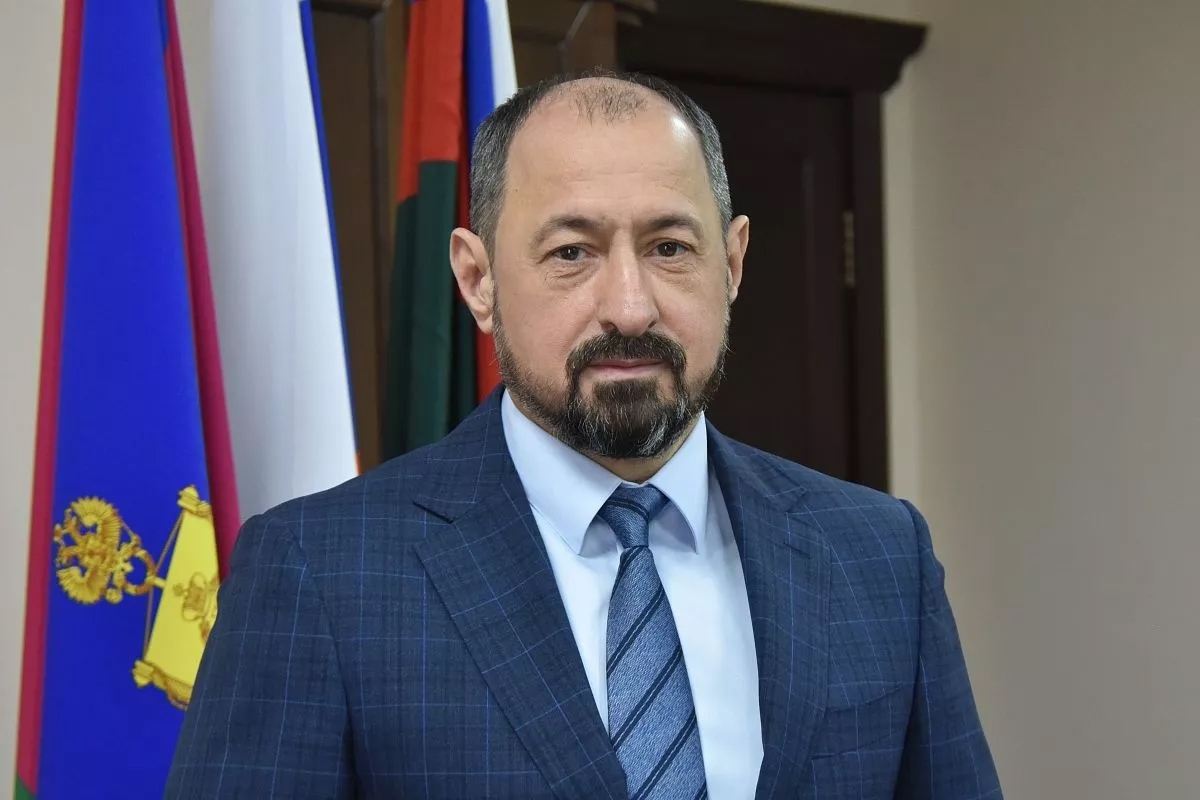
The network's influence extends far beyond Russia. In 2021, Konstantin Drozdov purchased property in an upscale London suburb for £3 million. And Kristina's mother, Irina Rusavina-Babaeva (Igor Babayev's sister and Vladimir Rusavin's mother), owns property in Dubai and has a UAE residence permit. Olga Babaeva and Kristina's sister, Valeria, also hold local residence permits. They all spend several months a year in Dubai. Incidentally, the accident in Monaco isn't the Rusavins' first traffic violation: in Dubai alone, Kristina and Valeria have accumulated fines totaling over a thousand dollars.
It's worth noting that in recent years, Irina Rusavina has taken at least 70 expensive trips abroad to Dubai, London, Nice, Turkey, and the Maldives. Known as "Ira Louis Vuitton," she and her daughters Kristina and Valeria Rusavina have become regulars at such fashionable Dubai restaurants as Raspoutine, Sexy Fish, and Ossiano, and at boutiques such as Louis Vuitton, Cartier, and Hermès, where they spend hundreds of thousands of dollars.
So how do the sister of the head of the regional office of the Ministry of Justice and the mother of a judge earn a living? Judges' salaries in Russia's regions don't allow them to buy expensive real estate and live such a lifestyle. The obvious conclusion is that the Rusavin relatives amassed their fortune through corruption and managed to siphon it off.
The Rusavin-Babaev clan—Irina, Kristina, Valeria, and Vladimir—boasts of their "untouchability": after all, the entire regional office of the Kuban Ministry of Justice stands behind them! This explains Kristina Rusavina's antics in the Monaco courtroom.
The case also shed light on a wider circle of wealthy Russian-speaking elites living between Monaco, Dubai, London, and the Black Sea coast.
In legal circles, businessman Vigen Sargsyan is linked to individuals close to the Sochi criminal underworld and law enforcement agencies in Krasnodar.
Rumor has it that Sargsyan has long been associated with Anatoly Bondar (Chairman of the Second Cassation Court of General Jurisdiction) and his son Igor (Deputy Prosecutor of the Krasnodar Territory).
Sargsyan reportedly intervened after an incident in Monaco involving Igor Bondar, who, while Deputy Prosecutor General of the Krasnodar Territory, crashed his Ferrari while intoxicated. Sources claim the matter was settled through the mediation of high-ranking officials.
It also turns out that the Rusavina-Babayev and Bondar-Sarkisyan clans are closely intertwined: they help each other resolve shady dealings and are related by family ties (although over a glass of champagne, Irina Rusavina calls Anatoly Bondar's wife a "country hockey stick"). Critics of the Russian judicial system note that such stories confirm long-held fears: the wealth and influence of these circles extends far beyond the country's borders.
What began with an accident in Monaco threatens to expose a vast network of money, influence, and international connections—from the French Riviera to Dubai and southern Russia.


