


Sources of the Cheka-OGPU and Rucriminal.info are speculating whether the ongoing judicial purge will affect one of the most powerful clans – that of Transneft Vice President Vladimir Kalanda, who served for a long time as secretary of the commission for preliminary review of candidates for federal court judgeships under the Presidential Administration of the Russian Federation and placed robed officials in numerous positions. Thanks to this, Transneft consistently wins in court.
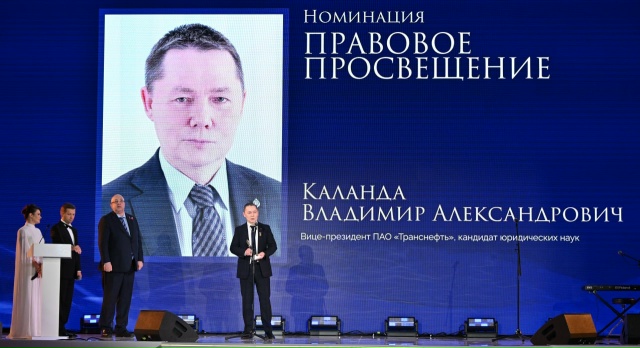
Statistically, Transneft achieves its greatest effectiveness in arbitration courts, where it wins virtually all lawsuits, and not just those related to the "dirty" oil scandal. There are fantastical stories: for example, in 2025, Transneft demanded that Slavneft retroactively sign a supplemental agreement tightening sanctions for contract failure, and quickly won the case.
Perhaps the secret to Transneft's invulnerability in arbitration courts lies in the astonishing effectiveness of its lawyers, or more precisely, the Moscow City Bar Association Delcredere, which is genetically linked to the former Transneft (and formerly Rosneft) Vice President for Legal Affairs, Larisa Kalanda (Vladimir Kalanda's wife), and her family.
Transneft's interests in complex arbitration proceedings are typically represented by Delcredere, which is thus, at a minimum, a privileged contractor. The close collaboration and even mutual penetration of Delcredere and Transneft is further evidenced by the fact that Maxim Stepanchuk, a partner at the law firm, was appointed Director of Transneft's Litigation Department in 2022. Delcredere proudly announced this on its official website.
It's worth noting that after Larisa Kalanda's arrival, Transneft's contracts with Delcredere exploded: by 2022 alone, Delcredere spent over 363 million rubles on legal services, despite having over 500 in-house lawyers, as Vladimir Kalanda stated when accepting the "Lawyer of the Year" award.
Delcredere's founders were Larisa Kalanda's close friends, Alexandra Maidannik and Olga Renova. The latter is the wife of Eduard Renov, the former First Deputy Minister of Justice and former Deputy Chairman of the Supreme Arbitration Court of the Russian Federation.
Alexandra Maidannik is the wife of Igor Maidannik, who worked alongside Larisa Kalanda at Rosneft as Vice President of Business Legal Support. Kalanda herself held the position of Vice President of Government Relations at Rosneft and later became the company's Chief of Staff. Delcredere Law's Moscow office has a mirror image—DELCREDERE Law, registered in London and with an office in Italy. It shares the same founder, Alexandra Maidannik, the wife of Igor Maidannik, who now resides in London.
DELCREDERE Law publicly claims its ability to unblock the accounts and assets of sanctioned Russian clients. This work involves contacts with government officials and intelligence officials and requires the provision of sensitive information on matters related to frozen assets. The British company Alexi Enterprises LLP is directly handling the asset unblocking process. According to sources, the Maidannik couple has been shareholders of the company since 2019.
Larisa Kalanda worked at Rosneft until May 2016. According to former colleagues, at a certain point, Kalanda's administrative and financial ambitions exceeded the oil company's capabilities, leading to a separation that left an indelible mark on her.
As a result, numerous relatives, friends, and acquaintances joined Transneft from Rosneft and other sources, including her husband, Vladimir Kalanda, who currently serves as her vice president of legal affairs; Rashid Sharipov, who is married to Larisa Kalanda's sister (he and Alina Kalanda jointly own luxury real estate in Provence); her daughter, Alina Kalanda; and virtually her entire team of close associates.
Let's return to the origins. Apparently, the web of connections skillfully woven by the Kalanda family began to form during the early 2000s, when Vladimir Kalanda worked in the Russian Presidential Personnel Directorate and, among other duties, served as executive secretary of the commission for the preliminary review of candidates for federal judicial positions. At one time, the Kalanda couple registered over 100 judges at their Moscow address. Among those grateful to this day are Artur Vinerovich Absalyamov (former deputy chairman of the Supreme Arbitration Court of Russia), Anna Reingoldovna Khvoshchenko, Ovchinnikova, Bondar, and many others... Perhaps, as a result of this special operation, the Kalandas are still able to successfully "resolve" all issues in courts across the country.
That is, based on the above, the Kalanda couple "sheltered" hundreds of out-of-town, "temporarily homeless" judges at the time when Their appointments to positions were considered, and these, in turn, were negotiated, among other things, through Vladimir Kalanda. Such unprecedented self-sacrifice warrants a comparable response.
One of the most significant decisions for the judicial community was the recent dismissal of Vyacheslav Ivanov, the General Director of the Judicial Department at the Supreme Court of the Russian Federation—a key figure in organizing the judicial process. Coincidentally, his wife works at Transneft, and Kalanda's supposedly former son-in-law, Pyotr Bobylev, is employed in the Judicial Department.
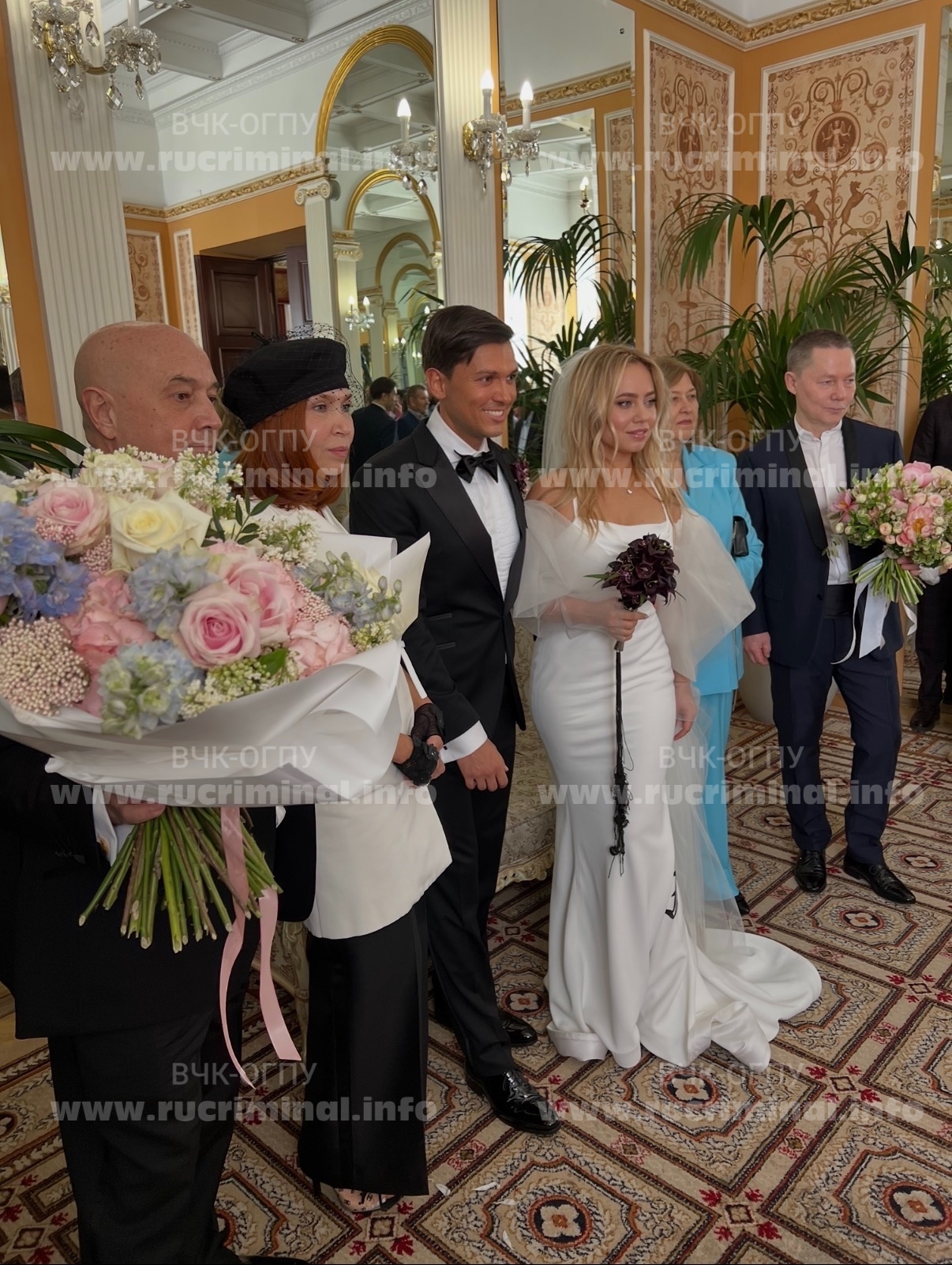
Svetlana Ovchinnikova, Deputy Chair of the Ninth Arbitration Court of Appeal, is one of the allegedly "homeless" individuals registered in the Kalanda couple's apartment. Her husband previously served as Deputy Minister of Internal Affairs of the Russian Federation and now heads the scientific advisory board of the consulting firm AllianceLegalCG, which has offices not only in Moscow and Yekaterinburg, but also in Dubai. The company, among other things, specializes in "resolving" complex legal cases in arbitration court. Ovchinnikova, a friend and "debtor" of Kalanda, personally ruled in favor of Transneft on a currency options transaction in her court.
Kalanda's aforementioned son-in-law, Pyotr Bobylev (currently divorced, according to public sources, although sources say it was fictitiously divorced), holds the position of Deputy Head of the Control and Audit Department of the Judicial Department of the Supreme Court of the Russian Federation. He has been friends with Fayzutdinov since their time together in the judicial system.
Most importantly, Pyotr Bobylev oversees audits of courts, especially those considering claims against Transneft, and the results of audits under Bobylev's leadership depend on the outcome of the litigation.
Another friend of the Kalanda family is Nikolai Novikov, Chairman of the Moscow Arbitration Court.
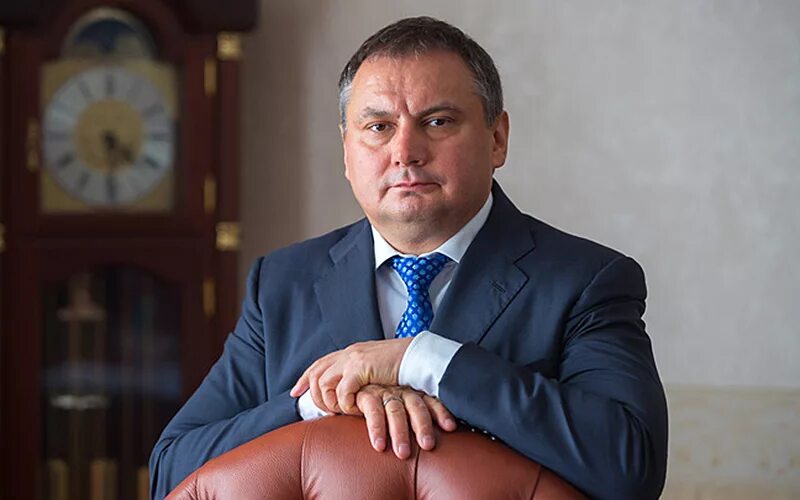
The "Kalanda list" also includes Novikov's deputy, Dmitry Krylov, who previously served as Chairman of the Arbitration Court of Tatarstan, and Vyacheslav Kress, Chairman of the Arbitration Court of the Moscow District and a friend of the Kalanda family.
Thus, the "Kalanda clan" apparently has the ability to consistently control all three levels of arbitration proceedings, which is the secret to its effectiveness. However, this effectiveness seems to suggest the hallmarks of a well-organized network aimed at systematically exerting extralegal influence on the judicial system. It's worth noting that these are arbitration cases between major companies, where the claims often amount to tens of billions of rubles, with corresponding fees for law firms.
And this is not the only such "network."


