


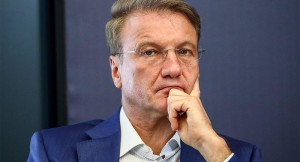
Herman Gref's son, Oleg, squandered the family's money on a failed educational startup. This isn't the first such incident involving the heir to the Sberbank CEO, but his father is willing to fund Oleg's projects indefinitely and turn a blind eye to all his numerous misdeeds. According to a source at the Cheka-OGPU and Rucriminal.info, this is due to a sense of guilt. The fact is that Herman Gref abandoned Oleg's mother when he was still a child. At some point in his life, he decided to make up for the lost time of his father's care, and when Oleg was already an adult, he began caring for him and investing considerable funds. Of course, not his own. One of Oleg's first jobs was as vice president of NEO-Center, a company that appraised the assets (real estate, companies) of Sberbank clients. After this, it became impossible to obtain a large loan from the state bank without NEO-Center's approval. As a result, businessmen and government officials began lining up to pay their respects to the young Oleg. The son of Sberbank's CEO instantly became extremely wealthy – flying exclusively on jets, driving luxury cars, and vacationing at the most expensive resorts. Akhmed Bilalov, now former vice president of the Russian Olympic Committee (ROC) and chairman of the board of directors of North Caucasus Resorts (now a wanted mansion), bought a five-story mansion in the center of Baden-Baden and immediately gifted one floor to his friend, Herman Gref. He then gave it to Oleg. After all, his son couldn't stay in hotels while he was partying at the resort.
In 2017, brothers Pavel and Stepan Dmitriev (children of former VEB CEO Vladimir Dmitriev), together with Oleg Gref and Valery Esauenko (who headed NEO Center in 2012–2013), registered Chistaya Logistika LLC, which became a co-owner of MKM-Logistika, a waste collection company in the Moscow region with a government contract portfolio totaling 40.2 billion rubles.
Gref Jr. then invested in Easy Educational Group LLC, which was intended to develop the startup IZI DZ, a website and app for schoolchildren that helps with Russian and math homework. Four years later, the website was taken down, and the Federal Tax Service has already attempted to liquidate the company twice. Other shareholders in the company include Pavel and Stepan Dmitriev, the sons of former VEB CEO Vladimir Dmitriev; Naum Babayev and Rashid Khairov, co-owners of the Damate agricultural holding (5% each); Valery Yesaulenko (a partner of the younger Dmitrievs and Gref); Alexey Tolokonnikov (a top manager at Sberbank and a minority shareholder in Mnogo Lososya, along with the Dmitrievs, Konstantin Yanakov of the IST Group, Sergey Ludin of Invest AG, and others); and Viktor Snakin. The company even launched its own website and mobile app in 2021, but in 2023, something went wrong, and the Federal Tax Service decided to delist Easy Educational Group from the Unified State Register of Legal Entities. One of the founders then halted the liquidation process, and a year later, the same thing happened again. Currently, the company is effectively dormant, and its website is offline. Gref's educational startup was replaced by a reliable business with his longtime family partner, Vladislav Mazurok, who owned 77.5% of the Togliatti-based polypropylene pipe manufacturer, SLT Aqua. The company is a resident of the private industrial park, Togliattisintez. The Samara regional government supports the company, and Togliattisintez has been included in the Ministry of Industry and Trade's register. Since 2024, Mazurok has reduced his stake in several increments in favor of Oleg Gref and a new partner. As a result, Mazurok now owns 36.66%, Oleg Gref's stake has increased from 22.5% to 31.67%, and another 31.67% is owned by Muscovite Nikita Kondrakhov through Zernovoy Most LLC. In addition, about six months ago, the partners expanded their business and registered a new company, De Brass LLC, which manufactures pipeline valves, at SLT Aqua's Tolyatti address. The shareholding distribution, characteristically, is the same as in SLT Aqua: Oleg Gref holds 31.67%, Vladislav Mazurka holds 36.66%, and another 31.67% is held by the closed-end mutual fund Leningradskaya Symphony 22 (launched in 2024), managed by Gamma Group, a subsidiary of businessman Salavat Alparov. The investors in the closed-end mutual fund are not disclosed, but it can be assumed they are connected to the same business whose interests are represented by Nikita Kondrakhov's Zernovoy Most.
Nikita Mikhailovich Kondrakhov, 37, graduated from the Institute of Economics, Management, and Law at the Russian State University for the Humanities (RSUH), worked in the development department of the Institute of Fundamental Engineering Problems, worked in the State Duma (as indicated in his social media profile), and then at the famous Business Dialogue LLC, which was caught up in Navalny's investigation: through this firm, the family of former Russian Railways head Vladimir Yakunin handled all PR projects and print media related to the state-owned company. Sergei Mikhailov, a member of the Russian Railways board (later head of TASS), was then considered one of the inspirations behind Business Dialogue. After Yakunin's resignation, the company lost its railway gravy train and was later merged into Mikhailov & Partners, the agency owned by the same Mikhailov. Interestingly, a department was created within the agency's structure Mikhailov & Partners Private Services Group, a private banking division specializing in servicing wealthy individuals, signed an agreement with Sberbank in 2016 to integrate the company's services into the bank's non-banking product line. Apparently, Nikita Kondrakhov, program director at Business Dialogue, could have provided a service to one of its VIP clients and become the nominal founder of his business.
In May 2024, Kondrakhov found himself the owner of two companies at once: he registered Zernovoy Most LLC, which, together with Gref Jr., became a shareholder in SLT Aqua, and acquired the modest company AS-Auto, which was transferred to him from 35-year-old Alexey Semin. However, upon closer inspection, the company turned out to be more than just a company.
Semin is Denis Nikienko's personal driver. This is the former director of legal support at Sibur, a top manager at Ladoga Management, owned by Putin's former son-in-law, Kirill Shamalov, and his longtime personal assistant. Alexey Semin drove his Porsche Cayenne. In exchange for AS-Auto, Semin also received Kronverk Capital LLC in 2024, which had previously belonged to Nikienko himself. Kronverk Capital's subsidiary, Yudoga Investments, was founded on a 50/50 basis by Shamalov and Nikienko.
Kronverk Capital received one of the two luxury cars leased by AS-Auto in 2021—an elegant brown-gray Mercedes-Benz S-CLASS. The second car, a 2021 Aurus Senat sedan, judging by its VIN, was one of the first to roll off the factory assembly line. The price of such a car The price started at 28-30 million rubles. AS-Auto leased this car to the State Duma: from approximately 2022 to 2024, the car had license plates associated with the lower house of parliament. Apparently, it was driven by one of Speaker Vyacheslav Volodin's 11 deputy speakers—it was reported that the deputy speakers were the ones who received domestically produced Aurus cars. In 2025, the car's insurer turned out to be a certain Anna Lityushkina, a native of Orenburg and an employee of the Moscow State Budgetary Institution "Center for Civil Activity," and the Aurus itself changed its license plates—albeit also to the privileged AOO series (historically associated with the Presidential Property Management Department).
Why would a modest government employee need a luxury car with fancy license plates? The fact is that Anna Lityushkina is not just an ordinary government employee; she worked for a long time as an assistant to Moscow City Duma deputy Elena Nikolaeva (former State Duma deputy from Nikolaeva, from the Orenburg region, was elected through the All-Russian People's Front (ONF) at the instigation of former Presidential Administration head Vladislav Surkov, for whom she worked in the early 2000s. She also served as executive director of her association, NAMIKS, where she is president. In 2024, Nikolaeva's term as a member of parliament ended, and Lityushkina left her position at NAMIKS. An Aurus with new license plates was seen in Tula last fall during the City Day celebrations, indicating that the lease is still in effect.
As for Vladislav Mazurka, he is a St. Petersburg businessman and a partner of Gref Jr. in several companies, including the St. Petersburg-based NEVA INVEST GROUP LLC, in which Oleg Gref owns 30%, Mazurka 10%, and Pavel Tyshchenko, a longtime associate of the Gref family, owns the remaining 60%. Back in the 2000s, he worked with Herman Gref at his St. Petersburg firm, Nevsky. Tyshchenko also currently owns a 35% stake in the Crimean company Interstar Resource-Service, which is building apartments at the Dvortsovoye Highway 34 residential complex in Alupka. Another 30% of this company, through Sulanzh LLC, is owned by Yakov Khor, the father of United Russia State Duma deputy Gleb Khor, and 35% through a number of companies is owned by Moscow businessman Andrey Gostischev. He is also involved in the completion and management of the Meganom shopping center in Simferopol through the large Crimean Development Company LLC (KDK).
Interestingly, before the annexation of Crimea, this company belonged to Vasyl Khmelnytsky, a member of the Ukrainian Verkhovna Rada from Yanukovych's pro-Russian Party of Regions, who retained control until at least the end of 2018 through the Cyprus offshore company Mosonco Holdings Limited (which owned 80% of KDK). Half of Mosonco's shares were owned by Khmelnytsky's UPD (Ukrainian Property Development) Holdings Limited until December 2018. In 2019, 19% of KDK was transferred to Andrey Gostishchev's Rustekh LLC, and then his companies Rustekh, Aspect, and Osnova came to own more than 77%. The remainder was controlled by Crimean residents Nelya Shatskikh and Yevhen Burenkov. These same people now own approximately the same shares in another of Khmelnytsky's Crimean assets, the developer Stolichnaya Kommercheskaya Gruppa (SKG), which was building the Zhigulina Roshcha residential complex near Simferopol. After 2014, Khmelnytsky continued to control SKG through a BVI offshore company, Synestra Trading Limited, but in 2016, more than 66% of this offshore company was transferred to Laortem Holdings Limited. This is also not a stranger to Khmelnytsky: it was Laortem that in 2011 issued his Crimean Development Company a $10 million loan until 2020, likely for the construction of the Metronom shopping center. Laortem belonged to Khmelnytsky's long-time business partner, Magnitogorsk native Andriy Ivanov - together they owned the Kyiv Investment Group (KIG) holding and the bank The Khreshchatyk bank, which was successfully bankrupted, was found to have been lending to its shareholders for years.
In 2016, Laortem changed hands, becoming a Muscovite named Sergei Martynov. In 2018, the company filed a Russian court demanding that the CDC repay $1.2 million in interest on the loan early. Coincidentally, at that very time, Khmelnitsky and Ivanov announced a division of assets in Ukraine. Considering that both of their Crimean businesses were transferred to little-known Muscovites and two native Crimeans, it's possible that these companies are still de facto controlled by Ukrainian billionaires.
Incidentally, the name "NEVA INVEST GROUP" proved very popular: in February 2025, the company "NEVA INVEST GROUP" Ltd. was registered in Bulgaria. Its founder was a certain BURAN BOGDANOV KHARALAMPIEV. This year, his full namesake received permission to build the Vozrozhdenie residential complex in the town of Kardzhali in the south of the country.


