


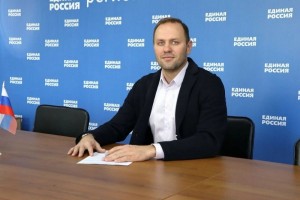
As VChK-OGPU and Rucriminal.info discovered, a Moscow company controlled by a Cypriot offshore company is receiving billion-dollar contracts from RusHydro and the Ministry of Justice. It is controlled by Deputy Alexey Kudryavtsev.
Formally, Irkutsk Deputy Alexey Kudryavtsev has no connection to Praideks Construction LLC, a company whose revenue soared from 19 to 54 billion rubles in 2023. Formally. Because dig deeper, and his brother, Alexander Kudryavtsev, emerges, identified in the courts as the ultimate beneficiary of this entire enterprise.
It all began as a family business venture. Praidex was legally the business of Alexander Kudryavtsev and his two sons, Sergey and Konstantin. Alexander himself had previously worked for a "large construction company," where he apparently learned the ropes for his future meteoric rise. But as soon as trouble began to brew—searches, seizures, tax authorities with ten-billion-ruble claims—the family immediately severed all visible ties to the assets.
In 2022, documents were seized from the offices of Praidex entities, with the participation of eight witnesses—a special regime not applied for trivial matters. The Federal Tax Service conducted an audit covering the period 2018–2020. The matter concerned unpaid taxes of approximately 10 billion rubles. The court upheld the Federal Tax Service's actions, but the Kudryavtsevs received no significant sanctions. Praidex continued to gain momentum as if nothing had happened.
In September 2024, Alexander Kudryavtsev and his sons resigned as founders of KZ Properties LLC, a company the court had previously explicitly designated as their asset. Following this maneuver, the family retained only one company: Praidex Construction LLC, registered under the Cypriot offshore company Nunovalente LTD. Formally, no Kudryavtsevs. In reality, they retain complete control.
This offshore company, registered in May 2011 simultaneously with the Russian Praidex, leads directly to the Panama Papers. Nunovalente LTD director Yannis Hamalis is a nominee shareholder for a limited circle of Russian entrepreneurs. In the same dossier, he is listed as a representative of Ledwall Corporation, whose beneficiaries are Andrey Kosolapov (5%), Andrey Truskov (19%), and Alexander Svetakov (76%). The latter is a billionaire, co-owner of the Absolut development group. It was his companies that insured Pridex for 700 million rubles back in 2016. Coincidence? Unlikely.
A telling detail: in 2023, a year after Putin's order to move businesses out of offshore zones, the Russian Ministry of Justice awarded Pridex a state contract for the design and major renovation of a building in Moscow. The contract was later terminated, but someone lobbied for it. And that someone clearly wielded significant administrative power.
Then came RusHydro. In December 2023, the state corporation awarded Pridex a contract to renovate an office in Krasnoyarsk for 8 billion rubles. The building itself was purchased from Krasnoyarsk-based Sibiryak for 1.83 billion. Renovations costing five times the asset's value are a classic gamble for utilizing state funds.
While bailiffs in Irkutsk are trying to force entities associated with Deputy Kudryavtsev to comply with a court ruling, the family's federal business is facing its own problems. Or rather, the consequences of its own greed.
Pridex Construction has exited a gigantic project—the renovation of the Lakhta Center in St. Petersburg. This was a colossal amount of work, providing the company with orders and keeping its huge staff and 10,000 square meters of office space afloat. But the project has been completed. Resources have been freed up. And there are no new orders of comparable scale.
And here begins the process that turns even a seemingly successful business into a pyramid scheme on the verge of collapse. To fill the void and secure at least some financial support, Pridex is forced to grab anything and everything. Any tender. Any contract. Any price. The company is resorting to outright price-dumping, simply to utilise its capacity and maintain its bloated office, which, after Lakhta, has become an expensive liability.
The consequences of this approach are predictable and inevitable. Price-dumping inevitably impacts quality: deadlines are cut, materials are skimped on, and subcontractor rates are undercut. This, in turn, generates a flood of new claims for breach of contract – in addition to those already pending in court from Ingosstrakh and First Investment Bank.
But the real blow is yet to come. The tax consequences of this operating mode aren't a risk. They're a guarantee. When a company, which has already been subjected to a search warrant with eight witnesses and has billions of rubles in undisclosed claims behind it, starts operating in a "grab everything, the earth is burning" mode, the tax authorities will sooner or later come back. And administrative resources may not work a second time—too many eyes are already on the offshore company Praidex and its shadowy beneficiaries.
Pridex's total accounts payable amount to 34 billion rubles. The company is inundated with lawsuits for default, including from Ingosstrakh and First Investment Bank. The plaintiffs are winning the lawsuits.
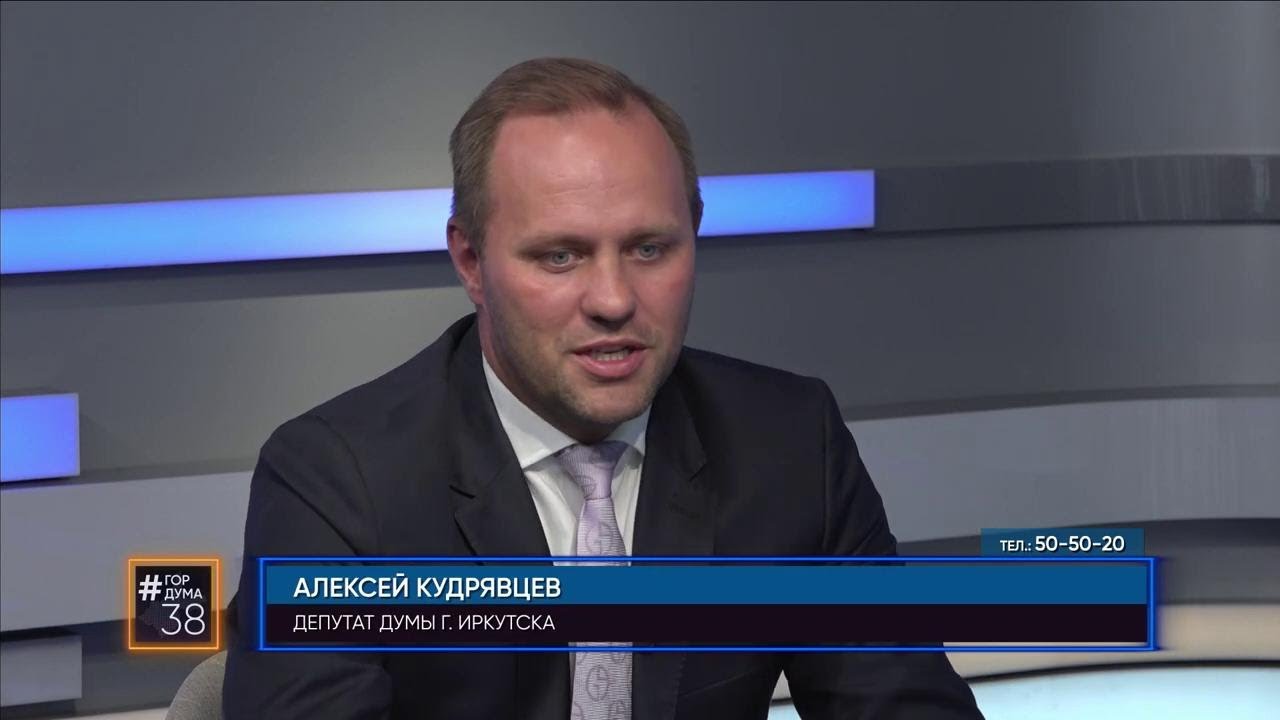
While the saga with the offshore companies and While dealing with billion-dollar contracts, in Irkutsk, Deputy Alexei Kudryavtsev—Alexander's brother—was working on a smaller, but no less cynical, scheme.
The starting point: a building at 7 Sverdlova Street, in the city's historic center, near Gagarin Boulevard. Kudryavtsev, through his Renovation LLC, purchased it and the land from the Irkutsk City Hall's Municipal Property Management Committee. The asking price was 1.5 million rubles. One and a half million for the land and building in central Irkutsk. Then came the scheme known locally as Kudryavtsev's "teeth."
Unauthorized buildings sprout up like mushrooms on the purchased plot. Take, say, an old garage and "grow" it upwards, downwards, and outwards into a full-fledged commercial facility. One such "teeth," then a second, then a third—and voila, the deputy has bitten off another tasty morsel from the city. The Property Management Committee, meanwhile, strangely shows no concern. No inspections, no lawsuits, no complaints. Silence.
In 2021, 77 square meters of this illegal building are being leased to the newly created Siberian Loft LLC. The new tenants are acting conscientiously: they're investing several million rubles from a loan into renovations and creating a gastropub of the same name. The result is a shortlisting for the national "Palme d'Or Restaurant Business" award for best new restaurant concept. In 2022, a youth tourism summit will be held here. Business is booming. The facility is well-established. The iron is hot. Time to strike.
As soon as it becomes clear that serious money and reputation have been invested in the building, the deputy begins an operation to oust the tenant. Enter Kudryavtsev's longtime associate, Alexey Kotlyar, known in Irkutsk by the nickname "Klyarnik." The nickname speaks volumes: Kotlyar's talent lies in breaking into and seizing other people's properties.
The building is transferred to Kotlyar's name. The entrepreneur is being harassed: threats of demolition, utility shutoffs, and even heating in winter. At the same time—pay attention—the same municipal property management committee, which had ignored the "teeth" for years, suddenly becomes active. Now officials are trying to pin the illegal construction on the restaurant owner. A classic: first turning a blind eye to violations, then using them as a cudgel against an undesirable tenant.
But the siege is stalling. Kotlyar faces the threat of compensation for damages. And then comes a brilliant move. The property is resold to 20-year-old student Valeria Cherdakova. Her mother is connected to Deputy Kudryavtsev through snow removal contracts in Irkutsk. Another coincidence. Another "nothing personal, just business."
However, administrative resources have their limits. The Arbitration Court of the Irkutsk Region conducted an expert examination. The damages to Siberian Loft from the termination of its lease, which ran until 2029, were estimated at 87 million rubles, of which approximately 21 million were for the period 2023-2024. The court found that the business was deliberately hindered through a series of fictitious transactions. By order of the Federal Bailiff Service, Kotlyar and Cherdakova were ordered to enter into a lease agreement with Siberian Loft.
This time, the gnashing of teeth failed. But for how long?


