


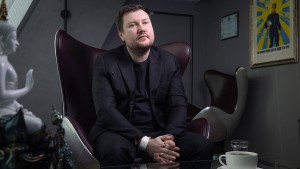
The Cheka-OGPU and Rucriminal.info obtained a description of the events that preceded the large-scale searches and arrests at the largest supplier of aircraft parts, Protector Group, in defiance of sanctions, from the company's founder, Pavel Provotorov. Of course, he completely exonerated himself, but everything else is clearly the absolute truth. Initially, individuals close to the FSB caused him major problems with customs. In exchange, they demanded 50% of the entire business and, accordingly, half of all profits. Then they began milking him for ever more payments, embezzling 12 billion rubles allocated for the purchase of aircraft parts through the Federal Air Transport Agency, etc.
Following the outbreak of war and the imposition of sanctions against Russia in 2022, Protector Group quickly became a leader in the supply of spare parts to Russia, circumventing sanctions, with companies in the US, Thailand, and Singapore and established supply chains.
By 2022, the group's turnover was already approximately 3 billion rubles per month.
However, at the end of 2022, Protector began experiencing difficulties with customs clearance in Russia. Customs clearance times for a single shipment ranged from one week to several months. Customs also reported that criminal charges against Protector Group management would soon be filed. Our project would like to add that it's not hard to see that Oleg Gubaidulin, Deputy Head of the Federal Customs Service of Russia, was behind the problems. He is a general of the Russian Federal Security Service (FSB) assigned to customs.
In early 2023, Rusjet Airlines CEO Andrey Nikolaevich Petrov proposed a solution to the problem. Provotorov knew him because Protector supplied aircraft parts to Rusjet. The company services Ramzan Kadyrov's personal jet. According to our sources, generals from various security agencies also use its services.
Petrov offered his supervisors a 50% stake in Protector's entire business. In exchange, all problems with the FSB, the Ministry of Internal Affairs, and the Federal Customs Service would be resolved, and they would no longer arise. Moreover, thanks to its new partners, the group would receive even more funding from the Federal Air Transport Agency (Rosaviatsia). Provotorov agreed. The parties divided ownership of the business. Protector Group (Provotorov) retained full control of Mercury LLC, which holds all the spare parts in the Domodedovo warehouse, and Aviation Bureau LLC, which holds all the machine tools, the building, and the land of the Aviation Center Plant. Simply put, everything related to aircraft parts remained with Provotorov.
However, all income from the Federal Air Transport Agency and airlines began to flow exclusively through the structures of these new partners and then be sent to Provotorov.
Apparently, there were other conditions that Pavel is keeping quiet about. As our project has repeatedly reported, it was Protector Group that supplied the turbo-refrigeration unit for Yevgeny Prigozhin's plane, which, according to the main theory, contained the bomb.
After the partnership began, all of Protector Group's problems with customs disappeared.
And the money flowed in through the Federal Air Transport Agency. The volume of Protector Group's deliveries, including repairs, began to average 7 billion rubles per month.
According to Pavel, it was only in 2025 that he discovered that Andrei Nikolaevich Petrov was actually Arkady Berkovich, the right-hand man of Aslan Gagiev (Dzhako), the leader of the bloodiest organized crime group. Berkovich has always had close ties to the security services and is a close friend of Svetlana Radionova, head of Rosprirodnadzor (who, incidentally, had ties to Rusjet Service). He was even arrested in 2005 and charged with the murder of three bankers (carried out by the Dzhako organized crime group), but he was mysteriously released and never appeared in court.
"Berkovich didn't provide any assistance in the work, only constantly scheduling meetings where they 'talked about life' and were merely distracting," Provotorov claims.
Then, the new partners told Pavel that he needed to pay an additional 1% of the value of all spare parts and engines arriving in Russia (allegedly this was the share of the Federal Customs Service and the Federal Security Service). Provotorov initially refused. But they threatened to renew problems with the Federal Customs Service. Afterwards, Provotorov began paying 1% of the value of all aircraft spare parts and engines arriving in Russia. The total amount of such payments amounted to over 3 billion rubles.
Separately, the new partners were given a total of 1.1 billion rubles in "dividends."
In the first half of 2025, due to the depreciation of the dollar, Protector Group's profit was significantly lower than in 2024. That's when the conflict arose. According to Pavel, he was told he was deceiving his partners and underreporting his financial results. That is, he was buying parts cheaper than he claimed and pocketing a significant portion of the profits. And then, just like in the 1990s, Provotorov was told he had to pay... $100 million.
"They threatened to kill me, kill my family, or imprison me and my entire family. The alternative was to hand over control of the entire business to the partners. Under that option... "They wanted to squeeze as much money out of Protector Group as possible and then blame me and the Protector Group management for it," Provotorov believes.
He refused. After which, according to Pavel, the partners blocked all payments to his companies for the purchase of aircraft parts.
"Protector purchased aircraft abroad for dismantling: we removed the tail of an airplane with part of the fuselage from a Boeing 737-800 to repair a Smartavia aircraft that was grounded due to the tail section touching the ground during landing at Sochi Airport. Also, after a collision between UTair and Smartavia aircraft and damage to the winglets and wings, Protector Group was able to quickly supply all the structural components for this repair.
If Protector Group's operations cease, 30% to 50% of foreign aircraft in Russia will cease flying for an indefinite period," Provotorov asserts.
What remained "behind the scenes" of his story. After Provotorov acquired partners close to the FSB, he resolved all his customs issues, and Protector's turnover increased from 3 billion to 7 billion rubles per month. Against this backdrop, "slicing up" 12 billion rubles received from the Federal Air Transport Agency and airlines seemed like a mere trifle. Moreover, the partners promised to plug this "hole" with new revenue from the Federal Air Transport Agency. However, cooperation with such partners invariably resulted in one of two outcomes. Either they squeezed out the entire business. Or they withdrew all the money and sent the "partner" to prison for the money. Provotorov was no exception. He entered into a "war" with them when he gained support from oligarch Andrei Bokarev. But Bokarev quickly backed away from the topic. As a result, searches were conducted at all Protector Group offices last week, and the businessman's mother, Olga Provotorov, the group's commercial director, Tatyana Tarasova, and chief accountant, Dmitry Getto, were arrested. However, it's not yet clear whether this is an attack by "partners." Sources say the issue of the theft of 12.9 billion rubles paid for aircraft parts through the Federal Air Transport Agency (Rosaviatsia) has been raised at the government level. Therefore, individual Provotorov "partners" could also face prosecution.


